What Does 15x70 Mean on Binoculars?
15x70 binoculars magnify a view 15 times and use 70mm objective lenses. That combination brings in more detail and light than smaller binoculars, but the size usually calls for a tripod.
On this page (7 sections)
15x70 binoculars magnify distant objects 15 times and have 70mm objective lenses. The first number tells you the power, while the second tells you the diameter of the large front lenses.
That combination is popular for astronomy because it offers more reach and light than many general-purpose binoculars. The trade-off is size: 15x70 binoculars are usually better on a tripod than in your hands.
What do the 15 and 70 mean?
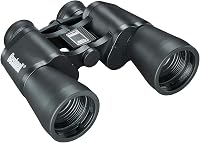
The 15 means 15x magnification, so an object appears about 15 times larger than it does with unaided vision. The 70 means 70mm objective lenses, which are the large lenses at the front of the binoculars.
Magnification helps you see more detail. The objective diameter affects how much light the binoculars can collect before sending the image to your eyes.
These numbers don't tell you everything. Focus type, field of view, eye relief, optical coatings, prism design, weight, and tripod compatibility also affect how the binoculars work.
For a broader overview of sizes and features, see our guide to what binoculars to buy.
Why do 15x70 binoculars suit astronomy?
15x70 binoculars suit astronomy because they combine strong magnification with large light-gathering lenses. You can use them to scan the Moon, bright star clusters, wide star fields, and some brighter deep-sky targets.
The 70mm objectives are much larger than the 42mm lenses common on compact binoculars. More lens area can help the view look brighter in dim conditions, although the final result also depends on the optics, sky darkness, your eyes, and the object you are observing.
The 15x power can show more detail than 7x or 10x binoculars. It also narrows the view and makes every small movement more visible.
For more observing context, read What Is the Difference Between a Telescope and Binoculars?. Binoculars give you two-eyed viewing and a wide, familiar way to scan the sky, while telescopes can offer higher powers with different setup needs.
What does the exit pupil mean on 15x70 binoculars?
The exit pupil is found by dividing the objective diameter by the magnification. For 15x70 binoculars, 70 divided by 15 gives an exit pupil of about 4.7mm.
A larger exit pupil can make the view easier to use in dim conditions, but it doesn't guarantee a brighter image by itself. Optical quality, coatings, focus, sky conditions, and your own eyes still matter.
For comparison, 10x50 binoculars have a 5mm exit pupil. That means 15x70 binoculars offer more magnification and larger lenses, while their exit pupil is slightly smaller.
Why do 15x70 binoculars need a tripod?
A tripod helps because 15x magnification makes hand shake obvious. The 70mm objectives also make this size larger and heavier than ordinary handheld binoculars.
You may manage a short view by bracing your elbows or resting the binoculars against a solid surface. That approach is less useful for a long astronomy session, when small movements become tiring and distracting.
A tripod lets you hold the binoculars on one target. It also makes it easier to compare details, wait for your eyes to adjust, and share the view with another person.
If you plan to use support, compare these best tripod mounted binoculars. Check the binoculars' mounting arrangement and the tripod's ability to hold them securely before setting up outdoors.
What should you check before mounting them?
Check that the binoculars have a compatible tripod adapter and that the tripod head can support the setup without drifting. Tighten the connection before aiming upward, and keep the legs on firm ground.
A tripod doesn't remove every vibration. Wind, a loose head, flexible legs, or touching the binoculars can still shake the image.
Start with low-risk targets and make sure the mount is stable before observing near the horizon or overhead. Never point binoculars at the Sun without a proper solar filter designed for safe solar viewing.
Are 15x70 binoculars better than 10x50 binoculars?
15x70 binoculars are better when you want more reach and plan to use support. 10x50 binoculars are better when you want a lighter, easier handheld option.
A 10x50 model generally gives you a steadier experience in your hands and may be easier to carry on a walk. A 15x70 model can show more detail and collect more light, but its increased power makes movement more noticeable.
Your choice depends on how you observe. If you are comparing another common size, read what 12x50 binoculars mean.
Choose 15x70 for supported astronomy and long-distance viewing, or choose 10x50 when portability and quick handheld use matter more.
The Pentax SP 10x50 binoculars review can help if you're comparing a more portable astronomy size.
Which 15x70 binoculars may suit your setup?
The best choice depends on whether you want a direct 15x70 match, more aperture, or a waterproof 20x60 design. We checked the stated specifications and features for the following options.
Celestron SkyMaster 15x70 Astronomy Binoculars for Stargazing
The Celestron SkyMaster 15x70 uses 15x magnification and 70mm objectives, making it the closest match to the question in this guide. It has multi-coated optics, BaK-4 prisms, a center focus, 18mm eye relief, a 4.7mm exit pupil, and a 4.4-degree field of view.
Its rubber-armored body is water-resistant. It includes a tripod adapter, objective lens caps, a rainguard, a carrying case, a neck strap, a lens cloth, and an instruction manual.
Choose it when you want the standard 15x70 balance. Remember that its size and 3.3 lb weight make supported viewing more practical for extended sessions.
Celestron SkyMaster 20x80 Binoculars for Deep-Sky Astronomy
The Celestron SkyMaster 20x80 increases both numbers. Its 20x power provides more magnification than 15x70 binoculars, while its 80mm objectives provide larger front lenses.
It has multi-coated optics, BaK-4 prisms, a 4mm exit pupil, an 18mm eye relief, and a 3.7-degree field of view. The rubber-armored housing is water-resistant, and the binoculars weigh 4.8 lb.
The built-in ¼”-20 adapter attaches to most tripods. The package includes a carrying case, instruction manual, lens cloth, neck strap, objective lens caps, and rainguard.
Choose it if you want more reach and can accept extra weight. The narrower field of view and stronger magnification also make steady mounting more important.
Pentax SP 20x60 WP Binoculars
The Pentax SP 20x60 WP uses 20x magnification and 60mm objective lenses. Its multi-layer coatings support light transmission, while the rigid rubber body is designed to maintain optical alignment.
It has a 3mm exit pupil, 21mm eye relief, manual center focus, and a 2.2-degree apparent angle of view. The binoculars weigh 3.1 lb and include a case.
Pentax describes this model as waterproof and nitrogen-filled to JIS Class 6, with submersion protection to 1 meter. Those weather features may appeal to outdoor observers who need a more protective design.
Choose it when weather protection and 20x power matter more than having 70mm objectives. Its 60mm lenses gather less light than a 15x70 or 20x80 design.
How should you use 15x70 binoculars for astronomy?
Start with a stable setup, focus during daylight, and begin with bright, easy targets. A daytime focus check can make your first night session less frustrating.
Set the tripod on firm ground and keep the binoculars close to the mount. Adjust the interpupillary distance until the two circles of view merge into one, then focus each eye as needed.
Begin with the Moon or a bright star cluster. Let your eyes adapt to the dark, avoid nearby white lights, and use slow movements while scanning.
The Moon can be bright through large objectives. If the glare bothers you, observe when part of the lunar surface is illuminated rather than only the full Moon.
For related optical terminology, see What Does Focal Length Mean on a Telescope?. Binoculars don't use telescope focal length in the same way, but the comparison helps explain why magnification and field of view are separate ideas.
What are the main trade-offs of 15x70 binoculars?
The main benefit is a strong balance of magnification and light-gathering size. The main cost is that the binoculars are less convenient to hold, carry, and aim than smaller models.
Choose 15x70 when you want a wide two-eyed astronomy view with more reach than 10x50 binoculars. Plan for a tripod if you want comfortable, detailed views over more than a short period.
Choose a larger 20x80 model when extra aperture and power suit your observing style. Choose a 20x60 waterproof model when weather protection and 20x magnification matter more than 70mm objectives.
For more options, see Best 15x70 Binoculars for Astronomy, then compare the Celestron SkyMaster 15x70 review and Celestron SkyMaster Pro ED 15x70 review before choosing.
In short, 15x70 means 15x magnification paired with 70mm objective lenses. Pick this size for supported astronomy and long-distance viewing, or choose a smaller binocular if handheld comfort and portability come first.
Frequently asked questions
What does 15x70 mean on binoculars?
The 15 means the binoculars magnify distant objects 15 times compared with unaided vision. The 70 means each front objective lens measures 70mm across.
Together, the numbers describe strong magnification and large light-gathering lenses, not the binoculars' brand or model.
Are 15x70 binoculars good for astronomy?
Yes, 15x70 binoculars suit astronomy because their 70mm objectives admit more light than common 10x50 binoculars, while 15x magnification reveals more detail. Their size and power make a tripod useful, especially for long sessions or views of the Moon, star clusters, and brighter deep-sky objects.
Can you hold 15x70 binoculars by hand?
You can hold 15x70 binoculars briefly, but hand movement becomes easy to see at 15x. The large lenses also add size and weight.
A tripod or other steady support gives you a calmer view and makes it easier to study an object instead of constantly correcting the aim.
What is the difference between 15x70 and 10x50 binoculars?
15x70 binoculars provide more magnification and larger objective lenses than 10x50 binoculars. They can show more detail and gather more light, but they are usually harder to hold steady and less convenient to carry.
Choose 10x50 for easier handheld use and 15x70 for supported astronomy.