Achromatic vs Apochromatic Telescope: Which to Choose? (November 2026)
Choose an achromatic telescope for affordable Moon and planet viewing, or an apochromatic telescope for sharper color correction and astrophotography. Your observing goals, budget and tolerance for false color should decide the design.
On this page (10 sections)
- Achromatic vs apochromatic telescope: what is the difference?
- Which design is better for visual astronomy?
- When is an apochromatic telescope worth choosing?
- Does aperture matter more than color correction?
- Which telescope is easiest to set up?
- Which design is better for astrophotography?
- What are the main trade-offs between these products?
- How should you choose between achromatic and apochromatic optics?
- Can an achromatic telescope be used for solar viewing?
- Final choice: achromatic or apochromatic?
Choose an achromatic telescope for lower-cost visual observing, or an apochromatic telescope for stronger color correction and imaging. The right choice depends on whether you care most about price, bright-object detail, portability or cleaner photographs.
Both designs use lenses instead of a primary mirror. The main difference is how well the objective controls color, especially around bright targets such as the Moon, Venus and bright stars.
This guide compares color correction, viewing goals, setup, portability and the trade-offs shown by these telescope options. Our score weighs specs, features and buyer feedback against what you're shopping for.
 Best for simple lunar viewing
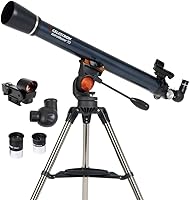
Celestron AstroMaster 70AZ Refractor Telescope for Moon
Achromatic vs apochromatic telescope: what is the difference?
An achromatic refractor brings 2 main colors close to focus, while an apochromatic refractor corrects color more fully across the visible range. That difference can make bright objects look cleaner through an apochromatic design.
An achromatic scope can show false color as a purple, blue or red fringe around a bright object. The effect is often easier to notice at higher magnification or when viewing a sharp edge against a dark sky.
Apochromatic optics reduce that fringe and can improve color separation in photographs. They don't remove every limit caused by aperture, focus, atmospheric turbulence or tracking.
The design choice is part of a wider telescope decision. Compare this with our guide on is a refractor or reflector telescope better before deciding whether a lens-based scope fits your observing style.
Which design is better for visual astronomy?
An achromatic refractor is usually the better fit for simple visual astronomy when the Moon, bright planets and easy setup matter most. An apochromatic refractor makes more sense when cleaner color and high-contrast views justify its higher cost.
The Celestron AstroMaster 70AZ has a 70mm fully coated achromatic objective and a 900mm focal length. Its manual alt-azimuth mount, 20mm and 10mm eyepieces, erect image diagonal and red dot finderscope suit straightforward pointing and viewing.
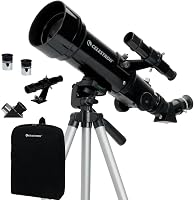
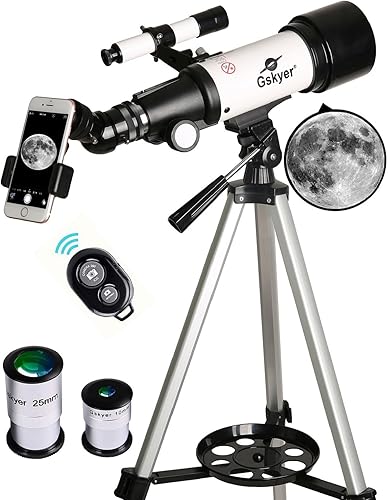
The Gskyer Telescope pairs a 70mm aperture with a 400mm focal length and an alt-azimuth mount. Its compact refractor format, carry bag, phone adapter and wireless remote suit beginners who want a portable setup for lunar, planetary and daytime targets.
An achromatic refractor can offer a clean path into astronomy because the lens system needs no mirror alignment. You still need to focus carefully, let the telescope adjust to outdoor conditions and avoid expecting high magnification to create detail that the atmosphere cannot support.
For a broader equipment comparison, see our guide to schmidt cassegrain telescope vs newtonian. Catadioptric and reflector designs can offer different aperture and focal-length trade-offs than either refractor type.
When is an apochromatic telescope worth choosing?
An apochromatic telescope is worth considering when false color would distract you or when you plan to capture clean images. The benefit matters most on bright stars, lunar edges, planets and photographs with strong contrast.
Apochromatic optics do not automatically create more light-gathering power. Aperture still controls how much light enters the telescope, while optical quality and focus affect how cleanly that light forms an image.
The ZWO Seestar S30 Pro is a different kind of apochromatic option. It combines apochromatic optics with app control, automatic GoTo targeting, automatic tracking and one-tap image processing.
The S30 Pro has a 30mm objective lens and a 160mm focal length. Its design is intended for deep-sky objects and wide-field imaging rather than planetary observation, so it suits a different goal from a traditional high-magnification refractor.
It includes a tripod, filter, Type-C cable, quick start guide, safety instructions and a battery. It works with a smartphone or tablet and weighs 3.6 lb, which supports travel and quick setup.
Keep the device stationary during deep-sky imaging so its tracking can remain stable. Apochromatic correction helps reduce color distortion, but the final image also depends on focus, sky conditions, light pollution and the imaging process.
Does aperture matter more than color correction?
Aperture often matters more than color correction for visual brightness and resolution, especially when comparing a small apochromatic scope with a larger reflector. Choose the optical design together with the aperture and your target list.
The Celestron AstroMaster 130EQ uses a 130mm Newtonian reflector rather than a refractor objective. Its larger mirror gathers more light than a 70mm refractor, which can help with bright deep-sky targets and lunar detail.
The 130EQ has a 650mm focal length and a German equatorial mount with slow-motion controls. It includes 20mm and 10mm eyepieces plus a StarPointer red dot finderscope.
A reflector does not create the same lens-based color correction question as an achromatic refractor. It can still have its own setup needs, including careful focusing, stable mounting and attention to the orientation of the image.
Our comparison of maksutov-cassegrain vs newtonian reflector explains how another reflector-based design changes the balance between portability, focal length and observing targets.
Which telescope is easiest to set up?
A manual achromatic refractor is usually the simplest setup, while an apochromatic smart telescope adds app connection and automated tracking. A larger reflector can offer more aperture but may need more careful handling and mount practice.
The AstroMaster 70AZ uses a manual alt-azimuth mount with a panhandle. Its adjustable tripod supports standing or seated use, and its main parts assemble without tools.
The Gskyer Telescope also uses an alt-azimuth mount and an adjustable aluminum alloy tripod. Its optical tube and tripod fit inside the carry bag, which makes storage and travel easier.
The Seestar S30 Pro needs a smartphone or tablet connection for its app-controlled workflow. Its automatic GoTo and tracking reduce manual target finding, but you still need a stable position, a charged power source and time for the imaging process.
The AstroMaster 130EQ uses an equatorial mount with right ascension and declination slow-motion controls. That layout can help you follow objects, but it has a steeper learning curve than a simple alt-azimuth mount.
If you're still comparing basic features, our guide on How Do I Know What Telescope to Choose? What to Know can help match the mount, aperture and target list to your routine.
Which design is better for astrophotography?
An apochromatic telescope is the stronger choice for color-sensitive astrophotography, while an achromatic refractor is better for learning basic imaging at a lower equipment level. Your camera method and tracking needs matter as much as the lens type.
The Seestar S30 Pro is built around imaging. It has dual-camera 4K imaging, app control, automatic tracking, one-tap capture and automatic mosaic stitching.
Its built-in light pollution filters and AI image processing are intended to help produce clearer images in urban skies. Those features simplify the workflow, but they don't turn a small 30mm objective into a high-magnification planetary telescope.
The Gskyer Telescope includes a smartphone adapter and wireless camera remote. That combination can help a beginner try phone-based images through a manual 70mm refractor, although the setup remains less automated than the Seestar workflow.
The AstroMaster 70AZ includes a computer-compatible astronomy software download, but its product data describes it primarily as a manual visual telescope. The 130EQ also includes astronomy software and a permanently mounted red dot finderscope, while its equatorial mount gives you manual control over tracking.
For a target-specific choice, use our jupiter telescope buying guide if planets are your priority. Jupiter rewards stable focusing, suitable magnification and steady air, not just an expensive optical label.
What are the main trade-offs between these products?
The 70mm achromatic refractors prioritize simple visual use, the Seestar prioritizes automated imaging, and the 130mm reflector prioritizes aperture. None is best for every observing goal.
The Celestron AstroMaster 70AZ is a strong match for families and beginners who want Moon and planet viewing with a manual mount. Its 70mm aperture limits light gathering compared with the 130mm reflector, but its refractor design and simple controls keep the learning path clear.
The Gskyer Telescope is the travel-focused option among the traditional refractors. Its 5.7 lb weight, carry bag, adjustable tripod, phone adapter and wireless remote support portable use, while its 400mm focal length favors a wider view than the AstroMaster 70AZ.
The ZWO Seestar S30 Pro is the most automated option. It weighs 3.6 lb and supports smartphone or tablet control, but it is designed for deep-sky and wide-field imaging rather than traditional planetary observation.
The Celestron AstroMaster 130EQ offers the largest aperture in this group. Its 17 lb weight and equatorial mount require more effort than the smaller refractors, but the 130mm Newtonian mirror gives beginners more light-gathering ability for deep-sky targets.
How should you choose between achromatic and apochromatic optics?
Pick an achromatic telescope if you want affordable, direct visual observing, and pick an apochromatic telescope if color correction and imaging are central to your plan. Choose a larger reflector when aperture matters more than refractor simplicity.
Use these decision rules:
- Pick the AstroMaster 70AZ for a stable, manual 70mm refractor aimed at Moon and planet viewing.
- Pick the Gskyer Telescope for a lighter 70mm refractor with a carry bag and phone accessories.
- Pick the Seestar S30 Pro for app-controlled, automated deep-sky imaging with apochromatic optics.
- Pick the AstroMaster 130EQ for a 130mm reflector and manual equatorial controls.
- Pick an achromatic design when a little false color is acceptable.
- Pick an apochromatic design when cleaner color is worth prioritizing for images and bright targets.
A refractor is not automatically better than a reflector, and apochromatic does not automatically mean more useful. Your targets, portability needs, mount preference and imaging plans should lead the choice.
Can an achromatic telescope be used for solar viewing?
Never point any telescope at the Sun without a properly designed and securely mounted solar filter made for the exact telescope. A normal achromatic or apochromatic refractor is not safe for direct solar viewing by itself.
A solar filter must be placed at the front of the telescope, not at the eyepiece. Inspect the filter before every session, keep the finder covered or removed unless it is also protected, and stop immediately if the filter shifts.
Do not use a dim eyepiece filter as a substitute for a full aperture solar filter. The front filter is the safe place because it blocks most sunlight before it enters the telescope.
Check that the filter fits snugly and cannot slide during use. A small movement or a gap at the edge can let unsafe light pass through very quickly.
Cover any finderscope unless it has its own proper solar protection. Even a small finder can gather enough light to cause harm or damage if it points at the Sun.
Our solar telescope buying guide explains what to look for in equipment intended for solar observing. Treat solar viewing as a separate safety task, even if the telescope is otherwise suitable for nighttime use.
If you do not have the correct filter, do not attempt solar viewing. Enjoy the telescope after dark, where its optics are made for the Moon, planets and stars.
Keep children supervised and make the rule clear before any daytime session. A clear setup routine helps everyone follow the same safe steps each time.
Final choice: achromatic or apochromatic?
Choose achromatic for simple visual astronomy and apochromatic for cleaner color and imaging. If you need more light for deep-sky viewing, compare both refractor types with a larger reflector instead of judging by optical label alone.
For a first visual scope, the AstroMaster 70AZ keeps the controls and setup simple. For portable phone-assisted viewing, the Gskyer adds travel-focused accessories.
For automated imaging, the Seestar S30 Pro is the clear fit. For aperture, the AstroMaster 130EQ offers the largest primary optic here.
The best achromatic vs apochromatic telescope choice is the one that matches how you will observe most often. Decide your main targets first, then choose the optical design and mount that make those sessions easy to repeat.
Frequently asked questions
What is the main difference between an achromatic and apochromatic telescope?
An achromatic telescope corrects some color but can show more false color around bright objects. An apochromatic telescope uses stronger color correction for cleaner star and planetary images, which is especially useful for astrophotography and high-contrast observing.
Is an apochromatic telescope better for beginners?
An apochromatic telescope can be better for a beginner who wants clean color and intends to capture images, but it may cost more than an achromatic refractor. An achromatic scope is often easier to justify when your main goals are the Moon, bright planets and simple visual observing.
Can an achromatic telescope show planets?
Yes. An achromatic telescope can show the Moon, bright planets and star clusters.
Bright targets may show a colored fringe around high-contrast edges, but that does not prevent you from seeing lunar craters, planetary shapes or other details within the scope's aperture and observing conditions.
Is the ZWO Seestar S30 Pro an apochromatic telescope?
The ZWO Seestar S30 Pro uses apochromatic optics and app-controlled imaging. Its 30mm objective lens, automatic tracking, 160mm focal length and smartphone or tablet control make it better suited to automated deep-sky and wide-field imaging than traditional manual planetary viewing.