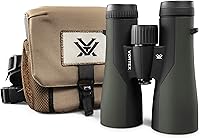
9 Best Canon Stabilized Binoculars (November 2026)
The best Canon image stabilized binoculars include the Canon 4625A002 15x50 is Image Stabilized Binocular for high-power astronomy, the Canon 10x42 L is WP Image Stabilized for all-weather stargazing, and the Canon Cameras US 10X32 is Image Stabilizing for lighter Canon viewing.
On this page (7 sections)
- The best Canon stabilized binoculars by use
- How magnification changes astronomy viewing
- How objective size affects Canon stabilized binoculars
- Are Canon image stabilized binoculars worth it?
- How to use and care for stabilized binoculars
- Canon stabilized binoculars versus a telescope
- Verdict: which Canon stabilized binoculars should you choose?
The best Canon stabilized binoculars for most stargazers are the Canon 10x42 L IS WP, but the Canon 15x50 is the stronger pick when you want more reach and a brighter 50mm objective. The compact Canon 10x30 and 10x32 are easier to carry, while the Canon 18x50 models suit high-power observing with more weight.
Image stabilization matters most when magnification makes small hand movements obvious. It helps keep the view steady while you watch the Moon, scan star fields or follow distant wildlife.
If you're still deciding what size and magnification fit your plans, start with our guide to what binoculars to buy. You can also compare this list with our wider guide to the best image stabilized binoculars.
Our picks at a glance
-
1
 Best for high-power astronomy
Canon 4625A002 15x50 is Image Stabilized Binocular
9.7/10 our score
See it on Amazon -
2
 Best for all-weather stargazing
Canon 10x42 L is WP Image Stabilized
9.7/10 our score
See it on Amazon -
3
 Best for lighter Canon viewing
Canon Cameras US 10X32 is Image Stabilizing
9.6/10 our score
See it on Amazon
- 4
 Check it
SIG SAUER ZULU6 HDX PRO 18x50mm FDE
Best non-Canon alternative - 5
 Check it
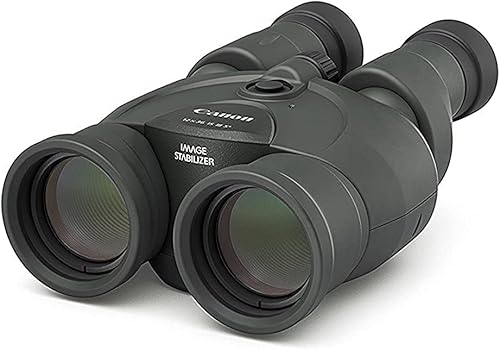
Canon 12x36 Image Stabilization III Binoculars
Best for compact mid-power views - 6
 Check it
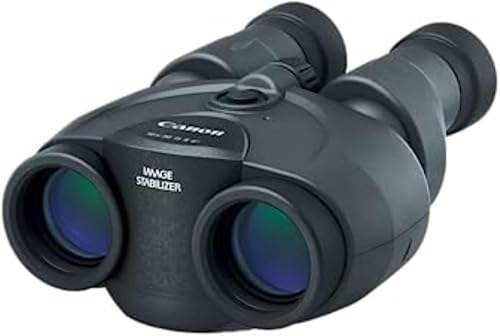
Canon 10x30 Image Stabilization II Binoculars
Best for travel and daytime use - 7
 Check it
Canon 18x50 Image Stabilization All-Weather Binoculars
Best for maximum Canon reach - 8
 Check it
Fujinon Techno Stabi TS1440-14x40 Image Stabilization Binocular
Best for rugged 14x viewing - 9
 Best for supported 18x viewingCheck it
The best Canon stabilized binoculars by use
The best choice depends on the balance between magnification, objective size, weight and weather protection. A 10x model is easier to hold, while 15x and 18x models show more detail but place greater demands on stabilization and handling.
We compared the stated optical features, stabilization systems, objective sizes, weights, eye relief and weather protection. Our score weighs specs, features and buyer feedback against what you're shopping for.
| Product | Best for | Magnification | Objective lens | Weight | Our score |
|---|---|---|---|---|---|
| Canon 4625A002 15x50 is Image Stabilized Binocular | high-power astronomy | 15x | 50mm | 2.6 lb | 9.7 |
| Canon 10x42 L is WP Image Stabilized | all-weather stargazing | 10x | 42mm | 2.4 lb | 9.7 |
| Canon Cameras US 10X32 is Image Stabilizing | lighter Canon viewing | 10x | 32mm | 1.7 lb | 9.6 |
| SIG SAUER ZULU6 HDX PRO 18x50mm FDE | non-Canon alternative | 18x | 50mm | 3.8 lb | 9.5 |
| Canon 12x36 Image Stabilization III Binoculars | compact mid-power views | 12x | 36mm | 1.8 lb | 9.3 |
| Canon 10x30 Image Stabilization II Binoculars | travel and daytime use | 10x | 30mm | 1.6 lb | 9.0 |
| Canon 18x50 Image Stabilization All-Weather Binoculars | maximum Canon reach | 18x | 50mm | 4.1 lb | 8.5 |
| Fujinon Techno Stabi TS1440-14x40 Image Stabilization Binocular | rugged 14x viewing | 14x | 40mm | 8.3 | |
| Canon 18 X 50 is All Weather | supported 18x viewing | 18x | 50mm | 1180 g | 7.8 |
Canon 4625A002 15x50 is Image Stabilized Binocular: Best for high-power astronomy
- 15x magnification
- 50mm objective lens
- Optical Image Stabilizer
- 15mm eye relief
- Weatherproof slip-resistant armor
The 15x50 combination gives skywatchers more reach and a bright field of view. Optical stabilization helps make that high magnification easier to use without immediately adding a tripod.
Pros
- High 15x magnification
- 50mm objective lens
- 15mm eye relief
Cons
- Heavier than compact Canon models
- Large body for travel
The Canon 4625A002 15x50 is the strongest choice here for high-power astronomy. Its 15x magnification brings distant targets closer than a 10x binocular, while the 50mm objective gives a wide, extra-bright field of view.
That mix suits the Moon, bright planets and distant wildlife when you want detail without setting up a telescope. It suits settled use on a deck or at a dark site more than long walks.
Canon combines Optical Image Stabilizer technology with multi-coated ultra-low-dispersion elements. The system compensates for handshaking and minute vibrations at the touch of a button.
It helps most when you pan slowly or hold the view for more than a few seconds. A relaxed grip and slow movement still matter at 15x.
At 2.6 lb, this is not a small travel binocular. The 15mm eye relief suits glasses wearers, and the weatherproof slip-resistant armor gives a secure outdoor grip.
For long sessions, a support can still reduce arm fatigue. Keep the lenses capped and dry the body after damp use.
Canon 10x42 L is WP Image Stabilized: Best for all-weather stargazing
- 10x magnification
- 42mm objective lens
- Waterproof and fog proof
- 4.2mm exit pupil
- 16mm eye relief
This is the most balanced Canon option here for outdoor astronomy, with 10x reach, a 42mm objective and waterproof construction. Its 4.2mm exit pupil also suits lower-light viewing.
Pros
- Waterproof and fog proof
- Bright 4.2mm exit pupil
- 16mm eye relief
Cons
- Heavier than 10x30 and 10x32 models
- More expensive class of binocular
The Canon 10x42 L IS WP is the best all-around Canon pick for outdoor astronomy. It combines moderate 10x magnification with a 42mm objective and waterproof, fog-proof construction.
Its 4.2mm exit pupil supports a bright view in lower light. That balance suits one pair for the sky, the shore and the field when damp weather may cut a session short.
This model uses Canon L-series optics with ultra-low-dispersion glass. The 16mm eye relief gives glasses wearers more room than several compact options.
Two ultra-low dispersion elements on each side help limit colour fringing around bright edges. That can make the Moon and bright stars look cleaner.
At 2.4 lb, it is heavier than the 10x30 and 10x32, but the extra objective and weather protection justify it for regular outdoor use. It comes with a padded case, strap, eyepiece rainguard, objective cap and 2 AA alkaline batteries.
Use the case for travel and carry spare batteries for cold nights. Choose it when weather exposure matters as much as portability.
Canon Cameras US 10X32 is Image Stabilizing: Best for lighter Canon viewing
- 10x magnification
- Lens-shift image stabilization
- Normal and Powered IS modes
- Tripod mount
- 1.7 lb weight
The 10x32 keeps the familiar 10x magnification while reducing weight compared with the larger Canon models. Normal and Powered IS modes give you two stabilization settings to match the view.
Pros
- Light 1.7 lb body
- Normal and Powered IS modes
- Tripod mount
Cons
- Smaller 32mm objective
- Not described as waterproof
The Canon 10x32 IS is the lighter 10x option for buyers who want stabilization without moving to a 42mm or 50mm body. At 1.7 lb, it is easier to carry than the larger Canon models.
It suits walkers, travellers and casual skywatchers who want a stabilized view in a bag they already carry. The smaller body is also easier to lift for repeated short looks during an evening.
Its lens-shift image stabilization has Normal and Powered IS modes, controlled through a simple 2-button interface. A tripod mount adds flexibility when you want to leave the binoculars supported.
Normal mode is the steadier starting point for general viewing. Powered mode can help when you need stronger correction, though you may notice more behaviour from small movements.
The 32mm objective is smaller than the 42mm and 50mm objectives in this roundup, so it is a better fit for daytime viewing, travel and casual sky scanning than for maximizing low-light brightness. The 3.2mm exit pupil also reflects that smaller objective and 10x design.
The large center focusing wheel and fold-down rubber eyecups keep operation straightforward. Choose this model if body weight matters but you still want two stabilization modes.
SIG SAUER ZULU6 HDX PRO 18x50mm FDE: Best non-Canon alternative
- 18x magnification
- 50mm objective lenses
- OmniScan optical image stabilization
- IPX-7 waterproof and fog proof
- Up to 40 hours with 2 AA batteries
The ZULU6 HDX PRO is the highest-power option here, with 18x magnification, 50mm objectives and weather protection. It is tripod mount capable and includes a foam carrying case and neck strap.
Pros
- Highest 18x magnification
- IPX-7 waterproof and fog proof
- Tripod mount capable
Cons
- Heaviest option here
- Not a Canon model
The SIG SAUER ZULU6 HDX PRO is the best non-Canon alternative for buyers who want 18x magnification with a 50mm objective. Its OmniScan stabilization uses a digital accelerometer to adjust correction based on movement and vibration.
That approach suits hunters and spotters tracking distant subjects from a vehicle, a blind or a settled position. It is less suited to casual scanning than to holding a high-power view on a chosen target.
This is the heaviest option here at 3.8 lb, but it adds IPX-7 waterproof and fog-proof protection. The thermoplastic frame and rubber armor suit outdoor handling, with 15.3mm eye relief.
Plan to carry it in the foam case and use a tripod for long sessions. The weight becomes clear after an hour of handheld use.
The binoculars use 2 AA alkaline batteries for up to 40 hours of runtime. They are tripod mount capable and come with a foam carrying case and neck strap.
Keep spare batteries in a dry pocket and keep lenses covered in storage. Choose it when reach and weather protection matter more than a light pack.
Canon 12x36 Image Stabilization III Binoculars: Best for compact mid-power views
- 12x magnification
- 36mm objective lens
- Vari-angle prism stabilization
- Doublet field-flattener lenses
- 14.5mm eye relief
The 12x36 model sits between compact 10x binoculars and larger high-power designs. It adds reach for the Moon and distant targets while staying at 1.8 lb.
Pros
- 12x magnification
- 1.8 lb weight
- 14.5mm eye relief
Cons
- Smaller objective than 15x50
- No waterproof feature stated
The Canon 12x36 Image Stabilization III is the middle ground for buyers who want more reach than 10x without a 15x or 18x body. Its 1.8 lb weight keeps it more portable than the large 50mm options.
It suits birdwatchers, travellers and lunar observers who want a step up in detail for a modest increase in size. It suits buyers who found 10x mild for distant subjects but do not want a heavy astronomy pair.
The 36mm objective works with 12x magnification, while vari-angle prism stabilization helps steady the image. Doublet field-flattener lenses keep the view sharp with less distortion toward the edges.
That edge performance helps when you scan a star field or follow birds across a wide scene. You spend less time fighting a soft edge and more time on the subject.
Its 14.5mm eye relief can suit glasses wearers, and lead-free glass and multi-coated optics support the compact design. The low-reflective exterior also helps for wildlife work.
Choose it for Moon viewing, distant wildlife or travel when 10x feels too mild. It is less suited to buyers who need waterproof protection or the brightest low-light view.
Canon 10x30 Image Stabilization II Binoculars: Best for travel and daytime use
- 10x magnification
- 30mm objective lens
- Vari-angle prism stabilization
- 14.5mm eye relief
- 1.6 lb weight
The 10x30 is the lightest Canon choice in this roundup. Its compact size suits travel, birdwatching and daytime viewing, with stabilization that helps steady the 10x view.
Pros
- Lightest Canon option here
- Compact 30mm objective
- 14.5mm eye relief
Cons
- Smallest objective among Canon picks
- Less light gathering than 42mm and 50mm models
The Canon 10x30 Image Stabilization II is the easiest Canon model here to carry. At 1.6 lb, it is the lightest Canon pick and a practical choice for travel, birdwatching, sports and daytime viewing.
It suits people who will carry binoculars in a day bag, in a car or on a walk where weight matters more than maximum brightness. It is also a good first stabilized pair for buyers who want to learn how stabilization changes handheld viewing.
Its 10x magnification is paired with a 30mm objective, Porro II prisms and vari-angle prism stabilization. Doublet field-flattener lenses support a sharp view from the center toward the edges.
In use, that means the view holds together well for scanning and for following subjects at a distance. The stabilization helps most at 10x when a small tremor would otherwise blur fine detail.
The 14.5mm eye relief gives glasses wearers useful space, while the low-reflective exterior suits wildlife observation. Its smaller objective gathers less light than the 42mm and 50mm choices, so it is not the first pick for dark-sky astronomy.
A tripod is listed as a compatible device, which gives you a way to support the binoculars for longer looks. Choose it if the binoculars will spend as much time in a travel bag as they do under the night sky.
Canon 18x50 Image Stabilization All-Weather Binoculars: Best for maximum Canon reach
- 18x magnification
- 50mm objective lenses
- Optical image stabilization
- Shock and water resistance
- 2 AA battery operation
This Canon reaches 18x with 50mm objectives and an all-weather design. It is suited to observers who value detail and stability more than a light carry.
Pros
- Highest Canon magnification
- 50mm objective lenses
- Shock and water resistant
Cons
- Heaviest Canon model here
- 4.1 lb can favor supported viewing
The Canon 18x50 Image Stabilization All-Weather Binoculars are for buyers who want the highest Canon magnification in this group. The 18x power and 50mm objectives can reveal more distant detail, while optical image stabilization helps reduce shake.
They suit observers who plan to work from a chair, a car, a deck or a tripod rather than from a hiking trail. The target is detail on the Moon, bright stars and distant subjects when you can settle in one place.
This model weighs 4.1 lb, making it the heaviest Canon option here. That weight is a real trade-off for handheld use, so plan your grip and consider supported viewing during long sessions.
Even with stabilization, 18x will show fatigue in your arms long before it shows a limit in the optics. A short rest or a support can keep the view usable for much longer.
The binoculars use 2 AA batteries, multi-coated lenses and an all-weather design. The body combines aluminum and polycarbonate with rubber exterior protection, and the 15mm eye relief gives a useful viewing margin.
The all-weather body helps in damp conditions, but it does not replace lens care. Dry the exterior after use, keep end caps fitted in storage and check the battery compartment before a long outing.
Choose this model when high power is the main goal and you can accept a large body. For easier carrying, the Canon 15x50 or 12x36 creates a more moderate step down in magnification.
Fujinon Techno Stabi TS1440-14x40 Image Stabilization Binocular: Best for rugged 14x viewing
- 14x magnification
- 40mm objective lens
- 5 degrees of stabilization
- Fog proof and waterproof
- Rubber armored body
The Fujinon adds a weather-ready alternative with 14x magnification and a rubber-armored body. Its 5 degrees of stabilization freedom suit moving outdoor subjects and high-power viewing.
Pros
- 14x magnification
- Fog proof and waterproof
- Rubber armored body
Cons
- Uses 4 AA batteries
- 13mm eye relief
The Fujinon Techno Stabi TS1440-14x40 is a weather-ready alternative for buyers who want 14x magnification without moving to an 18x50 design. It uses a 40mm objective, 5 degrees of stabilization freedom and a rubber-armored body.
It suits outdoor observers who expect damp air, wind or a moving platform. The mix of magnification and stabilization is aimed at subjects that fly, float or rock, rather than a calm fixed scene alone.
The binoculars are fog proof and waterproof, with a fiberglass-reinforced, high-durability plastic construction. Center focus and a ±5-diopter adjustment range give you control over the view.
The diopter range is worth setting once, then leaving alone for most sessions. After that, the center focus should be enough for day to day use with different subjects.
The main trade-off is power use. This model takes 4 AA alkaline batteries, more than the 2 AA designs in several Canon options.
That means more batteries to carry and more to replace over a season. It is a fair trade only if the stabilization and weather protection match how you plan to use the binoculars.
Its 13mm eye relief is also shorter than the 14.5mm to 16mm figures on some Canon models here.
Choose it if weather protection and a firm grip matter more than staying with Canon. It suits high-power outdoor viewing where the body may face damp or changing conditions.
Canon 18 X 50 is All Weather: Best for supported 18x viewing
- 18x magnification
- 50mm objective lens
- Waterproof all-weather design
- 2.8mm exit pupil
- Tripod compatibility
This Canon provides 18x reach, a 50mm objective and tripod compatibility in an all-weather body. It makes the most sense when high magnification is the priority.
Pros
- 18x magnification
- Waterproof design
- Tripod compatible
Cons
- Narrower 3.7-degree field of view
- High magnification needs careful handling
The Canon 18 X 50 IS All Weather is another high-power Canon option with 18x magnification, a 50mm objective and tripod compatibility. Its all-weather, waterproof design makes it suitable for outdoor viewing where moisture is a concern.
It suits observers who want Canon stabilization at the top end of the range in this roundup. The best use is from a settled position, with a tripod or a firm support for long looks.
The 2.8mm exit pupil and 3.7-degree real field of view reflect the high-power design. The apparent field of view is 67 degrees, which helps make the view feel less restrictive than the real field figure alone suggests.
In practice, the narrow real field means you need to aim with care. Find the target with a lower power view first when you can, then switch to 18x for detail.
At 1180 g, it remains a substantial binocular. The 15mm eye relief can help glasses wearers see more of the field, while battery operation supports its image stabilization system.
The weight and size make packing part of the decision. Use the case, keep the strap secure and avoid carrying the binoculars loose in a bag with other gear.
Choose it when you want Canon branding, 18x reach and a waterproof body. If you prefer a lighter Canon pair for handheld use, the 10x32 or 12x36 is easier to carry.
How magnification changes astronomy viewing
Higher magnification shows a larger view of distant targets, but it also makes hand movement easier to notice. A 10x binocular is usually the simplest starting point, while 12x and 15x models add reach without the full demand of 18x.
The Canon 10x30, 10x32 and 10x42 are the easiest group for broad sky scans. The Canon 12x36 and 15x50 are better for a closer look at the Moon and distant objects.
The 18x50 models show the most reach in this roundup, but their 50mm bodies are heavier. A tripod can help during long sessions, even when stabilization allows handheld use.
For a plain explanation of magnification, read How Does a Telescope Magnify Images? A Simple Guide.
Binoculars and telescopes use different optical layouts, but the basic trade-off between magnification, field of view and steadiness still matters.
How objective size affects Canon stabilized binoculars
Objective size affects how much light the binoculars collect and how large the body feels. The 30mm and 32mm models are easier to carry, while 42mm and 50mm choices favour brighter low-light viewing.
Match the objective to your time of day and session length. A compact objective suits daytime travel and quick evening scans, while a larger objective earns its weight after sunset.
The Canon 10x42 L IS WP has a 42mm objective and a 4.2mm exit pupil. The Canon 15x50 and 18x50 choices use 50mm objectives but weigh more.
Larger objectives also change handling. The body is wider, balance shifts forward and longer sessions ask more from your arms and neck.
Exit pupil size gives a simple clue about low-light comfort. A larger exit pupil can make the view feel brighter and easier to hold when your pupils are wide after dark.
A smaller exit pupil does not make a binocular poor. It simply means the view may dim sooner as light fades, which matters more for astronomy than for daytime birdwatching.
For travel, smaller Canon models reduce friction. You are more likely to bring them often and keep them in good condition when they carry less bulk.
For dedicated astronomy, larger Canon models make more sense. The extra light and reach support longer views of the Moon and brighter stars if you accept the added weight.
Weather protection and care also enter the choice. Larger lenses need more careful cleaning and a case that protects them during travel.
Choose the size you will use with ease, based on your plans, strength and expected conditions.
Are Canon image stabilized binoculars worth it?
Canon image stabilized binoculars are worth considering when you want higher magnification without relying on a tripod for every view. The value is strongest for buyers who scan distant targets, watch the Moon or use binoculars in moving settings.
They can help on a deck, a boat or a hillside where your stance is not perfectly still. In those places, stabilization makes a short observation more useful.
The trade-off is added weight, battery use and more setup than basic binoculars. Stabilization does not remove the need to focus, set the diopter or hold the binoculars steadily.
You still need to learn the controls, fit the eyecups and keep lenses clean. That learning curve is modest, but it matters for buyers who want to pick up a pair and look at once.
Value also depends on magnification. At 10x, stabilization is a helpful extra, while at 15x or 18x it can decide whether a handheld view is usable at all.
A tripod remains useful for long sessions, even with stabilization. Heavy 18x50 models benefit from support because fatigue will undo a steady image.
For daytime wildlife watching, the case is also strong. Stabilization helps you follow birds and distant animals without delay while you set up a mount.
Our guide to are image stabilized binoculars worth it explains when stabilization helps and when a standard binocular may be simpler.
If you mostly view from a tripod already, basic binoculars may be simpler and lighter. If you want freedom to move and still see detail, a stabilized Canon model earns its place.
How to use and care for stabilized binoculars
Start by setting the diopter for your eyes, then focus on a distant target with both eyes open. Use the stabilization button after the binoculars are pointed at the subject, and keep your grip relaxed.
Carry spare batteries when you plan a long outing. The Fujinon uses 4 AA alkaline batteries, while the Canon 10x42 L IS WP and several other models use 2 AA batteries.
Keep lenses capped when the binoculars are stored. If the body becomes damp, dry the exterior before putting it in a case, and use a soft cleaning cloth for dust or light marks.
Do not assume every stabilized binocular has the same weather protection. The Canon 10x42 L IS WP is waterproof and fog proof, the Fujinon is fog proof and waterproof, and the other products have different protection descriptions.
If you want to understand the electronics and optics behind stabilization, read How Do Image Stabilized Binoculars Work?. For a broader astronomy-focused comparison, see Best Image Stabilized Binoculars for Astronomy.
Canon stabilized binoculars versus a telescope
Canon stabilized binoculars give you a two-eyed view, quick setup and a wide view of the sky. A telescope can provide higher magnification and more detailed views of specific targets, but it usually needs more setup and a steadier mount.
Binoculars are useful for scanning star fields, following moving targets and sharing a view with another person. A telescope is often better when your goal is detailed lunar, planetary or deep-sky observation.
The choice is less about which tool is better in general and more about how you observe. If you like to move, scan and decide quickly, binoculars fit that habit.
If you like to settle on one target and study it, a telescope may fit better.
Stabilization narrows the gap for handheld binoculars at higher magnification. It helps you hold a view that would otherwise need a mount for a short period.
A binocular view may also look different from a telescope view. Read Why Do Telescopes Show Images Upside Down? for a simple explanation of telescope orientation.
Many observers end up using both tools for different tasks. Binoculars can find the target and give context, while a telescope can then show more detail.
Verdict: which Canon stabilized binoculars should you choose?
The Canon 10x42 L IS WP is the best balanced choice for outdoor astronomy. It combines 10x magnification, a 42mm objective, a bright 4.2mm exit pupil and waterproof, fog-proof construction.
It suits buyers who want one pair for the night sky, the shore and the field. Weather protection and a brighter low-light view give it an edge over compact models for regular outdoor use.
Choose the Canon 15x50 for more reach and a 50mm objective, or the Canon 10x32 for lower weight and two stabilization modes. Pick the Canon 10x30 for travel, the Canon 12x36 for compact mid-power viewing, and an 18x50 model when maximum detail is worth the extra weight.
The 10x models are easier to hold for longer. The 15x and 18x models ask for more care and often benefit from a support.
The SIG SAUER option suits buyers who want a non-Canon alternative with strong weather protection and high magnification. Its weight suits settled use more than long walks.
The Fujinon suits a rugged 14x pair for damp or moving conditions. Its battery use and shorter eye relief are the main costs to accept.
For a close look at one compact option, continue with our Canon 10x32 IS binoculars review.
Match the final choice to your habits before you buy. Favour light gathering and weather protection for night use, or a compact body you will actually bring for travel.
Our top 3 picks at a glance
-
1
Best for high-power astronomy
Canon 4625A002 15x50 is Image Stabilized Binocular
9.7/10 our score
See it on Amazon -
2
Best for all-weather stargazing
Canon 10x42 L is WP Image Stabilized
9.7/10 our score
See it on Amazon -
3
Best for lighter Canon viewing
Canon Cameras US 10X32 is Image Stabilizing
9.6/10 our score
See it on Amazon
Frequently asked questions
What are the best Canon stabilized binoculars for astronomy?
The Canon 10x42 L IS WP is the best balanced choice for many astronomy buyers because it combines 10x magnification, a 42mm objective, a 4.2mm exit pupil, waterproof construction and fog-proof performance.
Choose the Canon 15x50 for more reach and a 50mm objective, or the Canon 18x50 models when maximum Canon magnification matters more than weight.
Are Canon image stabilized binoculars good for stargazing?
Yes. Canon image stabilized binoculars can make handheld views steadier, which is useful at 10x, 12x, 15x and 18x magnification.
Objective size also matters.
A 42mm or 50mm model can gather more light than a 30mm model, while a compact 10x30 is easier to carry and hold for longer.
What is the best Canon binocular magnification for astronomy?
10x is the easiest starting point for broad sky views and handheld use. Move to 12x or 15x when you want more detail on the Moon or distant targets, then consider 18x only if you can manage the extra size, weight and narrower field of view.
Do image stabilized binoculars need a tripod?
Not always. Image stabilization is designed to compensate for hand movement, so the Canon 15x50 and other stabilized models can be used handheld.
A tripod can still help during long observing sessions or with heavier 18x50 binoculars.
The Canon 10x32 and Canon 10x30 also offer a lighter handheld path.
How do I choose between Canon 10x30, 10x32 and 10x42 binoculars?
Choose the Canon 10x30 for the lightest carry, the Canon 10x32 for lighter viewing with Normal and Powered IS modes, or the Canon 10x42 L IS WP for a larger objective and waterproof, fog-proof construction.
The 10x42 weighs 2.4 lb, compared with 1.6 lb for the 10x30 and 1.7 lb for the 10x32.