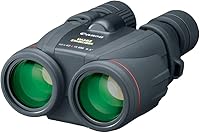
Canon 10x32 IS Binoculars Review: Worth It? (November 2026)
The Canon Cameras US 10X32 is Image Stabilizing Binocular (1372C002) suits stargazers who want 10x magnification without a tripod. Its lens-shift stabilization and 32 mm lenses make a midsize, handling-first choice, while larger non-stabilized models offer wider exit pupils for darker skies.
On this page (12 sections)
- The Canon 10x32 IS at a glance
- Who the Canon 10x32 IS suits best
- Canon 10x32 IS binoculars review: specs that matter in daily use
- Stabilization, Normal mode and Powered mode explained
- Handling, grip and eye comfort
- Setup: first use, focus and diopter
- Using the Canon 10x32 IS under the sky
- Care, storage and battery habits
- Trade-offs: what you give up for stabilization
- Alternatives in this review
- How the three models compare for your goals
- Verdict: should you buy the Canon 10x32 IS?
The Canon Cameras US 10X32 is Image Stabilizing Binocular (1372C002) is a handheld-first 10x pair with powered lens-shift stabilization. In this canon 10x32 is binoculars review, we compare its stabilization, handling and 32 mm lenses with two alternatives that solve different problems.
Our score weighs specs, features and buyer feedback against what you are shopping for.
You should read this model as a stability tool, not as a light-gathering tool. Its 10x power and stabilization help you hold on to a star field, while its smaller lenses set the limit for faint objects.
The Canon 10x32 IS at a glance
The Canon 10x32 IS gives you 10x magnification with lens-shift stabilization in a 1.7-pound body. That mix targets handheld astronomy, birding and travel, where a tripod would slow you down.
Canon Cameras US 10X32 is Image Stabilizing: Best for handheld sky watching

- 10x magnification
- 32 mm objective lenses
- Lens-shift image stabilization
- Normal and Powered IS modes
- 6.6 ft minimum focusing distance
- 3.2 mm exit pupil
- 1.7 pounds
A midsize Canon model built around powered stabilization for handheld viewing. It trades a smaller exit pupil for steadier images at 10x without a mount.
Pros
- Powered IS steadies handheld views
- Normal and Powered modes for different uses
- Large center focusing wheel
- Fold-down rubber eyecups
- Case, strap and battery included
Cons
- 3.2 mm exit pupil is small in low light
- Plastic enclosure rather than aluminum
- Stabilization needs battery power
The box includes the binocular, eyepiece caps and cord, neck strap, case, one alkaline battery and printed matter. That battery detail matters, because stabilization will not work without power.
Why the stabilization matters at 10x
At 10x, even small hand movements move the whole field. Canon's lens-shift system moves an internal lens to counter that shake, so the view stays steadier than in a plain 10x pair.
To weigh the benefits for your own use, read whether image stabilization is worth it.
You get two modes to choose from. Normal mode suits static scenes, and Powered mode suits moving subjects and handheld viewing with microcomputer control.
Who the Canon 10x32 IS suits best
The Canon 10x32 IS suits handheld stargazers who want a steady view without setting up a mount. It also suits daytime users who scan wildlife, sports or landscapes and want less shake.
It fits observers who value speed. You can raise it, press the IS control, focus with the large center wheel and start viewing in seconds.
It suits newer astronomy users who are still learning the sky. A steady 10x view makes it easier to find and follow bright stars, the Moon and open clusters.
It is a weaker fit if your main goal is faint deep-sky objects. Small lenses and a 3.2 mm exit pupil will not match a 42 mm pair on dim targets.
Our guide to what binoculars to buy helps you match size and power to your own sky and habits.
Canon 10x32 IS binoculars review: specs that matter in daily use
The key specs are 10x magnification, 32 mm lenses, 3.2 mm exit pupil and a 6 degree apparent angle of view. Those numbers explain both the strengths and the limits of this model.
Exit pupil is the bright beam that reaches your eye. At 3.2 mm, it is smaller than your pupil in dark conditions, so the image will look dimmer at night than a 10x42 view at 4.2 mm.
The 6.6 ft (2 m) minimum focusing distance keeps close work out of reach. You will focus on distant landscapes, animals and sky targets instead.
Multi-coated lenses and a field-flattener lens system help the image stay cleaner toward the edge of the field. Fold-down rubber eyecups help you set eye position with or without glasses.
Center focus lets you adjust both barrels together with the large wheel. A wide-range diopter adjustment then fine-tunes the right eyepiece for differences between your eyes.
Stabilization, Normal mode and Powered mode explained
Stabilization is the reason to choose this Canon model. Lens-shift IS counters hand shake so 10x feels calmer in your hands.
Normal mode is the gentler setting for static scenes. Powered mode adds microcomputer control for stronger correction when you are moving or holding an unsteady view.
A simple two-button user interface keeps the controls easy to learn. You do not need a menu or a phone app to switch modes.
Stabilization also adds a dependency. The included alkaline battery powers IS, so you should carry a spare LR6 battery for longer trips.
If the view wobbles when you press the IS control, check your grip and battery first. A firm, relaxed hold helps any IS system work its best.
For a wider view of this technology, see our guide to best image stabilized binoculars before you decide.
Handling, grip and eye comfort
The Canon 10x32 IS weighs 1.7 pounds and measures 5.7 inches by 6.7 inches. That size is easy to carry on a strap but large enough to feel steady in two hands.
The plastic enclosure keeps weight down compared with an aluminum body. Canon describes the design as improved, with a comfortable grip for longer sessions.
Fold-down rubber eyecups give you a choice of eye relief. You can raise them for a closer fit or fold them down if you wear glasses.
The large center focusing wheel is easy to find by touch. That helps when you want to refocus quickly between targets.
A neck strap and case are included, so you can carry it ready to use. Canon also lists a tripod mount type, which can help for long sessions even though IS is built for handheld use.
Setup: first use, focus and diopter
Setup takes a few minutes. Install the battery, set the eyecups, focus with the center wheel and adjust the diopter for your eyes.
Start by fitting the neck strap and inserting the battery. Then hold the binocular at a distant target and turn the center wheel until the image is sharp.
Next, close one eye and adjust the right eyepiece diopter until that side is sharp. Keep your main focus on the center wheel after that step.
Set the eyecups for your glasses or sunglasses before you start. That small step can make the view feel much larger and more comfortable.
If you plan to share the pair, note the diopter position. Each user may need a quick readjustment for their own eyes.
For finding targets with a finder, our guide to the best red dot finder for binoculars explains the next step some observers add.
Using the Canon 10x32 IS under the sky
For astronomy, use the Canon 10x32 IS for bright stars, the Moon, planets as small disks and wide star fields. Stabilization helps you sweep slowly and pause on a target.
Start with the Moon and bright clusters to learn how 10x moves across the sky. Slow pans work best, because fast movements make tracking harder.
Use Normal mode for a static star field on a calm night. Switch to Powered mode when hand shake or a moving target makes the view harder to hold.
Dark adaptation matters more than extra power. Give your eyes time to adjust, use a dim red light and avoid white light between targets.
A wider-field approach can help you plan sessions. Read What Is the Difference Between a Telescope and Binoculars? to see where binoculars fit best.
Care, storage and battery habits
Keep the Canon 10x32 IS dry, clean and powered with a fresh battery when you need IS. Wipe the lenses only with a soft lens cloth and avoid touching the glass.
Store the pair in its case with the eyepiece caps fitted. That protects the eyecups and keeps dust off the lenses between sessions.
Remove the battery for long storage if you will not use the binocular for weeks. That habit helps prevent battery leaks from damaging the compartment.
Avoid leaving the binocular in a hot car or in direct sun for long periods. Heat and direct sun can stress the body, the strap and the battery.
Check the strap, caps and cord for wear now and then. A loose cap or strap is a small fix that prevents a dropped binocular.
Trade-offs: what you give up for stabilization
The main trade-off is light gathering for steadiness. The Canon 10x32 IS steadies the image, but 32 mm lenses and a 3.2 mm exit pupil limit faint-object viewing.
A plain 10x42 pair gives you a brighter night image with no battery needed. You then accept more hand shake or use a support for the steadiest view.
The plastic enclosure is another trade-off. It helps keep weight at 1.7 pounds, but it is not the same rugged build as an aluminum-armored model.
Stabilization also adds a failure point. If the battery runs flat, you still have a working 10x binocular, but you lose the feature you paid for.
That trade makes sense for handheld use. It makes less sense if you always observe from a tripod or a bench, where shake is already controlled.
Alternatives in this review
Occer 12x25 Compact Binoculars for Adults
The Occer pair gives you 12x power and a 7.5 degree field of view in only 0.39 kg. Fully multi-coated lenses and a BAK4 prism help the image, and adjustable eyecups suit glasses wearers.
The trade-off is clear. With no stabilization and a 2.5 mm exit pupil, hand shake and low light are harder limits than on the Canon model.
Vortex Diamondback HD 10x42 Binoculars
The Vortex pair gives you 10x magnification with 42 mm lenses and no battery needed. Argon purging and O-ring seals provide water and fog proof performance, and the body uses aluminum with rubber armor.
It is tripod adaptable, so a support can steady the view for faint targets. The trade-off is weight and bulk compared with the compact Occer pair, plus no IS for handheld use.
How the three models compare for your goals
Choose the Canon 10x32 IS for steady handheld viewing at 10x. Choose the Vortex 10x42 for brighter low-light views with no power.
Choose the Occer 12x25 for the lightest, most portable daytime pair.
Size tells part of the story. The Canon weighs 1.7 pounds, the Vortex weighs 1.3 pounds and the Occer weighs 0.39 kg, so carry and support needs differ a lot.
Power tells another part. The Occer reaches 12x, while the Canon and Vortex stay at 10x, which is easier to hold but shows less detail on distant targets.
Exit pupil tells the night-sky story. The Vortex at 4.2 mm will look brighter than the Canon at 3.2 mm, and both beat the Occer at 2.5 mm after dark.
If you want a larger Canon model, read our Canon 15x50 is binoculars review to see how size and power change the experience.
Verdict: should you buy the Canon 10x32 IS?
Buy the Canon 10x32 IS if you want a steady 10x view in your hands with no tripod. It is the best fit here for handheld astronomy, wildlife scanning and travel.
Pick the Vortex Diamondback HD 10x42 if low light matters more than stabilization. Pick the Occer 12x25 if you want the smallest, lightest pair for daytime use.
For astronomy-specific picks, see the best image stabilized binoculars for astronomy and our look at best canon stabilized binoculars before you choose your final model.
Also check are 20x50 binoculars good if you are torn between a midsize handheld pair and a larger, heavier model for brighter views.
Frequently asked questions
Are the Canon 10x32 IS binoculars good for astronomy?
They work well for bright stars, the Moon and wide-field scanning because stabilization steadies the view at 10x. The 3.2 mm exit pupil limits faint deep-sky viewing, so fainter objects will look dimmer than in a 10x42 pair.
Use them for handheld sky tours and pair them with a larger model for faint targets.
Do the Canon 10x32 IS binoculars need a tripod?
No, powered stabilization is designed for handheld use and reduces the need for a tripod. A tripod can still help for long, relaxed sessions and for sharing views with others.
Turn off stabilization on a firm mount if the image looks odd, since IS is meant to correct hand movement.
What does Powered IS do on the Canon 10x32 IS?
Powered IS uses microcomputer control to shift the lens and counter hand shake during viewing. Canon provides both Normal and Powered modes, with a simple two-button interface.
Powered mode suits moving targets and handheld use, while Normal mode can suit static scenes.
How close can the Canon 10x32 IS binoculars focus?
The minimum focusing distance is 6.6 ft (2 m), so you should not expect sharp focus on very close objects. That distance suits landscape, wildlife at a distance and sky viewing rather than close inspection work.
For closer subjects, choose a model built for near focus.