5 Best Portable 70mm Telescopes with Backpacks (November 2026)
The best portable 70mm telescopes with backpacks include the Celestron Travel Scope 70mm Beginner Portable Telescope for simple travel setup, the Gskyer Telescope for phone-friendly travel, and the Celestron Travel Scope 70mm DX Refractor Telescope for travel photography extras.
On this page (3 sections)
The best portable 70mm telescope with a backpack is the Celestron Travel Scope 70mm Beginner Portable Telescope. It combines a 70mm refractor, no-tool setup, full-height tripod and padded backpack for easy camping and travel use.
For more campsite-ready options, see the best telescopes for camping.
This kind of kit suits a family that wants one scope for a campsite, a backyard and a daytime walk. The telescope packs with its accessories, so you do not need a separate bag for loose parts.
A 70mm aperture gives enough light for useful Moon views, bright planets and daytime scenery. The objective lens is wide enough for a bright Moon while keeping the tube light enough to carry.
The main differences are focal length, included phone accessories, weight and the carrying system. A longer tube can suit closer views, but it may take more room in a car or pack.
Set-up matters as much as the optics for a first telescope. A preassembled mount and full-height tripod mean less time with parts and more time observing.
If you are still comparing travel sizes, read What Is a Good Travel Telescope? What to Know before choosing a kit.
That guide can help you decide whether a backpack, carry bag or case fits your travel.
Think about who will use the scope most often. Kids and adults can share a simple altazimuth setup when eyepieces and a finderscope are included.
A simple kit is often easier for beginners than a long list of extras. You can build skills later, but the telescope you carry outside is the one you will use.
A portable 70mm refractor works for Moon viewing at night and scenery during the day. That mix suits camping trips, school projects and quiet evenings in the garden.
The trade-off is that portability limits size and reach. A compact scope shows bright targets well, while faint objects still need a dark site and patience.
Our picks at a glance
-
1
 Best for simple travel setup
Celestron Travel Scope 70mm Beginner Portable Telescope
9.7/10 our score
See it on Amazon -
2
-
3
 Best for travel photography extras
Celestron Travel Scope 70mm DX Refractor Telescope
9.3/10 our score
See it on Amazon
Which portable 70mm telescope with a backpack is best?
The Celestron Travel Scope 70mm is the strongest all-around pick because its setup is simple and its accessories cover basic night and daytime viewing. The Gskyer is close behind for phone-friendly travel, while the DX adds more imaging accessories.
Our score weighs specs, features and buyer feedback against the needs of someone shopping for a portable 70mm telescope with a backpack. We checked aperture, focal length, carrying options, setup details and included accessories.
That balance is a useful starting point for a beginner who does not want to study a manual for an evening. A no-tool setup and a full-height tripod can make the first session feel welcoming rather than fiddly.
Phone accessories change the shortlist for some buyers. A phone adapter and remote can help you share a view, but they only work well when the tripod is steady and the target is already centered.
Focal length also deserves a close look before you decide. A 400mm tube is a middle ground for many beginners, while shorter and longer options change how wide or close the first view feels.
Weight should be judged by how you travel, not only by the number on the page. A light kit is easier on a walk, while a heavier kit may still suit car camping if it carries better accessories.
The backpack itself is part of the choice, not just a bonus. It should hold the tube, tripod, eyepieces and finderscope without forcing you to leave useful parts at home.
Reading the specs together helps you avoid a mismatch between the scope and your plans. Aperture, focal length, mount and carrying system all affect how often you will actually use the telescope.
That is why a simple backpack kit often wins for travel. It keeps the basics together, and the basics are what a new observer needs first.
| Product | Best for | Aperture | Focal length | Weight | Our score |
|---|---|---|---|---|---|
| Celestron Travel Scope 70mm Beginner Portable Telescope | simple travel setup | 70mm | 400mm | 4.2 lb | 9.7 |
| Gskyer Telescope | phone-friendly travel | 70mm | 5.7 lb | 9.7 | |
| Celestron Travel Scope 70mm DX Refractor Telescope | travel photography extras | 70mm | 3.3 lb | 9.3 | |
| Koolpte Telescope for Kids | a longer focal length | 70mm | 500mm | 5 lb | 9.3 |
| Jvcla Telescope for Kids | a wide magnification range | 70mm | 300mm | 8.7 |
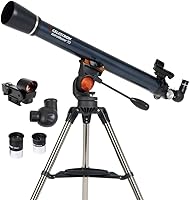
1. Celestron Travel Scope 70mm Beginner Portable Telescope: Best for simple travel setup
Celestron Travel Scope 70mm Beginner Portable Telescope: Best for simple travel setup
- 70mm refractor
- Fully coated glass lenses
- 20mm and 10mm eyepieces
- Padded backpack included
The 70mm refractor offers day and night use, while the preassembled mount and backpack keep travel simple.
Pros
- No-tool setup
- Full-height tripod
- Backpack has room for accessories
Cons
- Manual focus
- No smartphone adapter included
The Celestron Travel Scope 70mm is the easiest kit here to pack and start using. Its 70mm aperture and fully coated glass lenses are suited to Moon, planet and daytime scenery viewing, while the 400mm focal length supports a broad beginner-friendly field.
The mount and tripod arrive preassembled, and the tube and full-height tripod set up without tools. The padded backpack has room for the telescope and accessories, including the 20mm and 10mm eyepieces, 45-degree erect image diagonal and 5x24 finderscope.
The 20mm eyepiece is the better starting point for locating a target. Switch to the 10mm eyepiece when you want a closer view and the target is centered.
At 4.2 lb, this is not the lightest kit by listed weight, but it balances a manageable carry weight with a full-height tripod and a dedicated backpack. The kit also includes Starry Night Basic Edition software and the SkyPortal app for planning and identifying objects.
Choose it when quick setup matters more than phone photography. For more choices aimed at grown-up users, compare these best portable telescopes for adults.
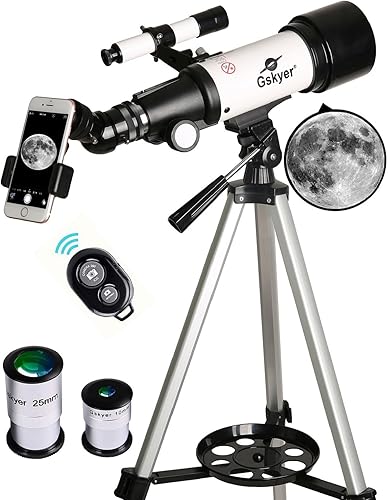
2. Gskyer Telescope: Best for phone-friendly travel
Gskyer Telescope: Best for phone-friendly travel
- 70mm aperture
- 400mm focal length
- 3x Barlow lens
- Phone adapter and wireless remote
The Gskyer combines a 70mm refractor with a carry bag, phone adapter and wireless remote for travel observing.
Pros
- Phone adapter included
- Adjustable aluminum tripod
- 3x Barlow lens
Cons
- Heavier than the Celestron Travel Scope
- Manual focus
The Gskyer is a strong choice if you want a portable 70mm refractor with a phone adapter and wireless camera remote. Its 400mm focal length and fully coated optics suit Moon, planetary and terrestrial viewing.
The kit includes two replaceable eyepieces, a 3x Barlow lens and a 5x24 finderscope with cross-hair lines. The Barlow lens increases the eyepiece magnification, so it gives you more viewing options without adding another standard eyepiece.
A carry bag holds the telescope and tripod for travel. The adjustable aluminum tripod supports different viewing positions, while the altazimuth mount keeps movement straightforward for a beginner.
At 5.7 lb, the Gskyer is heavier than the Celestron DX and the basic Travel Scope. That extra weight may be worth it if you plan to use the phone adapter and wireless remote during daytime trips or casual Moon photography.
Choose it when phone use is central to your observing plan. Set up outdoors and let the telescope reach the outdoor temperature before viewing, since temperature changes can cause moisture on the objective.
3. Celestron Travel Scope 70mm DX Refractor Telescope: Best for travel photography extras
Celestron Travel Scope 70mm DX Refractor Telescope: Best for travel photography extras
- 70mm refractor
- Smartphone adapter and Bluetooth remote
- 2x Barlow lens
- Moon filter and backpack
The DX keeps the compact 70mm format and adds phone imaging accessories, a 2x Barlow lens and a Moon filter.
Pros
- Backpack included
- Moon filter included
- Bluetooth shutter remote
Cons
- Manual focus
- More accessories require more packing space
The Celestron Travel Scope 70mm DX is the best fit for buyers who want a backpack kit with more phone and Moon-viewing accessories. It keeps the 70mm fully coated refractor and quick no-tool setup of the basic Travel Scope.
The DX adds a smartphone adapter, Bluetooth shutter release remote, 2x Barlow lens and Moon filter. The remote can help reduce shake when you capture images through the eyepiece, while the Moon filter is intended for reducing the Moon's bright glare.
Its 20mm and 10mm eyepieces give you two starting points for wide and closer views. The erect image diagonal makes daytime viewing more comfortable, and the 5x24 finderscope helps you locate a target before switching to the main telescope.
At 3.3 lb, it is the lightest telescope in this group by listed weight. The included backpack helps with transport, but the extra phone and filter accessories mean you should organize the bag before leaving home.
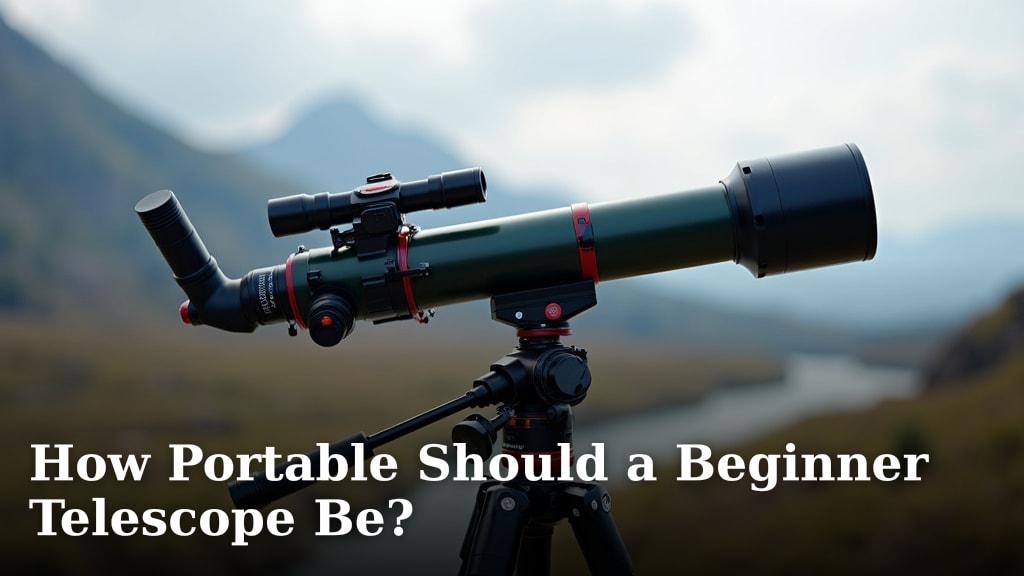
Choose the DX if you want the most complete travel photography kit here. Read How Portable Should a Beginner Telescope Be? for help matching the kit to your transport plans.
4. Koolpte Telescope for Kids: Best for a longer focal length
Koolpte Telescope for Kids: Best for a longer focal length

- 70mm aperture
- 500mm focal length
- 25mm and 10mm eyepieces
- Phone adapter, wireless remote and carrying case
The 500mm focal length and beginner-focused accessories suit families that want a portable telescope for Moon and landscape viewing.
Pros
- 500mm focal length
- Phone adapter included
- Carrying case included
Cons
- Heavier than the DX
- Manual focus
The Koolpte uses a 70mm aperture and 500mm focal length, giving it the longest focal length among these picks. That makes it a useful option for a family that wants a portable beginner telescope for Moon and landscape viewing.
The kit includes 25mm and 10mm eyepieces, a 3x Barlow lens and a 5x24 finderscope. Start with the 25mm eyepiece to find a target, then try the 10mm eyepiece after the telescope is centered.
A phone adapter, wireless remote and adjustable aluminum tripod add convenience for outdoor use. The carrying case is useful for transport, although the listed weight is 5 lb, so it is better suited to car trips or short carries than long walks.
The altazimuth mount and manual focus keep the controls familiar for beginners. Like the other refractors here, it can serve for daytime scenery as well as night-sky viewing.
Choose Koolpte when the 500mm focal length and family-focused accessories matter more than the lowest carry weight. For a broader explanation of the aperture question, see [Is a 70mm Telescope Good for Beginners?
What to Know](/is-a-70mm-telescope-good-for-beginners/).
5. Jvcla Telescope for Kids: Best for a wide magnification range
Jvcla Telescope for Kids: Best for a wide magnification range

- 70mm aperture
- 300mm focal length
- 15x to 150x magnification
- Phone adapter and wireless remote
The Jvcla offers a short 300mm focal length and several optical accessories for beginners who want flexible Moon and nature viewing.
Pros
- 15x to 150x range
- Fully multi-coated optics
- Phone adapter included
Cons
- No carry backpack named in the product title
- Manual focus
The Jvcla is the flexible choice for beginners who want a stated 15x to 150x magnification range. Its 70mm aperture, 300mm focal length and fully multi-coated optics are aimed at Moon, star and nature viewing.
The kit includes 20mm and 6mm interchangeable eyepieces, a 1.5x erecting eyepiece and a 3x Barlow lens. Use the lower magnification first to locate a target, then move higher only after the image is centered and focused.
A 5x24 finderscope helps with locating objects. The phone adapter and wireless remote support simple phone captures of distant scenery through the telescope, while the tripod provides the support needed for steadier viewing.
The shorter 300mm focal length favors a wider starting view than the longer focal-length models here. Its stated 150x upper range gives flexibility, but clear views at higher magnification depend on careful focusing, steady support and suitable conditions.
The product data names a gift box for carrying and storage rather than a backpack. Choose it if the magnification range and phone adapter matter more than having a dedicated telescope backpack.
How do you choose a portable 70mm telescope?
Choose by the way you will carry and use the telescope. A dedicated backpack favors quick trips, while a carry bag can work well when you travel by car and want phone accessories or a longer focal length.
What does 70mm aperture mean for travel viewing?
A 70mm aperture is the diameter of the telescope's objective lens. In daily use, it gives these refractors more light-gathering ability than smaller beginner scopes, which helps with bright Moon views, planets and daytime targets.
A larger aperture can also make a kit harder to carry, but every model here uses the same 70mm objective size. The practical differences come from the tube length, tripod, accessories and carrying case.
How does focal length change the view?
A shorter focal length generally supports a wider starting view, while a longer focal length can suit closer views of the Moon and distant scenery. The Jvcla has a 300mm focal length, the Celestron Travel Scope and Gskyer use 400mm, and the Koolpte uses 500mm.
Focal length is only one part of the result. The eyepiece also matters, because magnification comes from dividing the telescope's focal length by the eyepiece focal length.
Are backpacks better than carry bags?
A backpack is better when you need both hands free while walking to a campsite or observing area. The Celestron Travel Scope and Celestron DX specifically include backpacks, while the Gskyer includes a carry bag and the Koolpte includes a carrying case.
Before leaving, pack the tube, tripod, eyepieces, finderscope and any phone accessories together. Keep lenses capped when they are not in use, and avoid placing the optical tube where it can be knocked against hard gear.
Can these telescopes take phone pictures?
The Gskyer, Celestron DX, Koolpte and Jvcla include phone adapters. The Gskyer, Celestron DX and Koolpte also include wireless or Bluetooth remotes, while the Celestron DX adds a 2x Barlow lens and Moon filter.
Phone adapters are most useful after the telescope is steady and the target is centered. Start with a bright, easy target such as the Moon, use the lower-power eyepiece first and focus manually before attempting a photo.
How should you set up a portable telescope?
Set the tripod on firm ground and place the telescope as directed. Begin with the lower-power eyepiece and use the finderscope to locate the target.
Focus slowly through the main telescope once the target is in view. Small, slow movements will help you get a sharp image.
A firm surface helps more than it may seem. Grass, sand and soft soil can let a tripod sink or wobble.
Press the legs in gently and check that the telescope does not drift. Let go and make sure the mount holds steady before you start observing.
Start with the lower-power eyepiece because it gives a wider view. It is also easier to aim when you are learning the controls.
Once the target is centered, you can switch to a higher-power eyepiece. Focus again with small, slow movements until the image is clear.
The finderscope makes aiming less frustrating for a beginner. Line up a bright target in the finder first, then look through the main telescope.
Give the telescope time to reach the outdoor temperature. Moisture can form on the objective during a large temperature change, so keep it protected when not in use.
That settling time is part of good care, not just a tip for better views. A dry, capped lens will last longer and need less cleaning.
Keep eyepieces in their case or cap them when they are not in the telescope. Dust and fingerprints can soften an otherwise clear view.
When you pack up, remove the eyepiece, cap the openings and fold the tripod. Place the tube where it cannot knock against hard gear.
Never aim a telescope at the Sun or near the Sun. The concentrated light can cause serious eye injury, even on a cloudy day.
Which portable 70mm telescope should you buy?
Pick the Celestron Travel Scope 70mm for the simplest backpack setup and a balanced day-to-night kit. The Gskyer suits buyers who want a phone adapter and 3x Barlow lens.
The Celestron DX adds a Moon filter and Bluetooth remote for travel photography. The Koolpte suits buyers who want a 500mm focal length and family accessories.
The Jvcla offers a stated 15x to 150x range, but it does not name a dedicated backpack. Match the carrying system to your trip first, then compare focal length and phone accessories.
A backpack keeps both hands free on a walk. A carry bag can work well for car travel and extra accessories.
Think about where you will observe most often before you choose. A campsite, garden and hilltop all call for slightly different packing plans.
Focal length should match the viewing you plan to do. A shorter focal length can give a wider starting view.
A longer focal length can suit closer looks at the Moon and distant scenery. Check which style you are more likely to use.
Phone accessories are worth choosing only if you will use them. A phone adapter and remote can help capture a bright target.
They also add parts to pack and need a steady tripod to work well. Do not pay for extras you will leave at home.
Weight matters in daily use, especially on foot. Check what is included, not only the listed weight.
Eyepieces, diagonals, remotes and filters all add bulk in the bag. A lighter kit is easier to carry to a dark site.
Manual focus is common in this group, so allow patience for first sessions. Focus slowly and start at low power.
Move up only after the target is centered. That habit will make learning easier for beginners and families.
The right kit is the one you will carry outside and set up often. Match it to your trip, then compare focal length and accessories with care.
Our top 3 picks at a glance
-
1
Best for simple travel setup
Celestron Travel Scope 70mm Beginner Portable Telescope
9.7/10 our score
See it on Amazon -
2
-
3
Best for travel photography extras
Celestron Travel Scope 70mm DX Refractor Telescope
9.3/10 our score
See it on Amazon
Frequently asked questions
What is the best portable 70mm telescope with a backpack?
The Celestron Travel Scope 70mm Beginner Portable Telescope is the best overall choice here because it combines a 70mm refractor, no-tool setup, full-height tripod and padded backpack. The Gskyer and Celestron DX are better fits if phone accessories are a priority.
Are 70mm telescopes good for travel?
Yes. A 70mm refractor can suit camping, backyard use and daytime viewing when the tube, tripod and accessories pack into a carry bag or backpack.
Check the packed weight and included case, then choose a darker observing site for better views of faint objects.
Is a 70mm telescope good for beginners?
A 70mm telescope is a practical beginner size for Moon views, bright planets and daytime scenery. The models here use manual focus and altazimuth-style movement, so beginners can learn the basic controls without a complex tracking system.
What should a telescope backpack hold?
A useful telescope backpack should hold the optical tube, tripod and basic accessories such as eyepieces, a finderscope and diagonal. Extra room matters if you also carry a phone adapter, remote, Barlow lens or Moon filter.
Can I use a portable telescope during the day?
Yes. Several models here are described for both celestial and terrestrial viewing.
Use the finderscope and lower-power eyepiece to locate distant scenery, wildlife or buildings, and never aim any telescope at the Sun.