5 Best Reflector Telescopes for Beginners (November 2026)
The best reflector telescopes for beginners include the Celestron PowerSeeker 127EQ Reflector Telescope for Home for first-time family observing, the MEEZAA Telescope for a larger beginner aperture, and the Celestron Cheshire Collimation Eyepiece for Reflector for reflector maintenance.
On this page (11 sections)
- The best reflector telescope for beginners by use
- How we compared beginner reflector telescopes
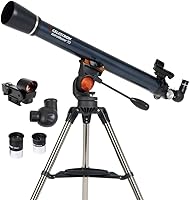
- 1. Celestron PowerSeeker 127EQ: Best for first-time family observing
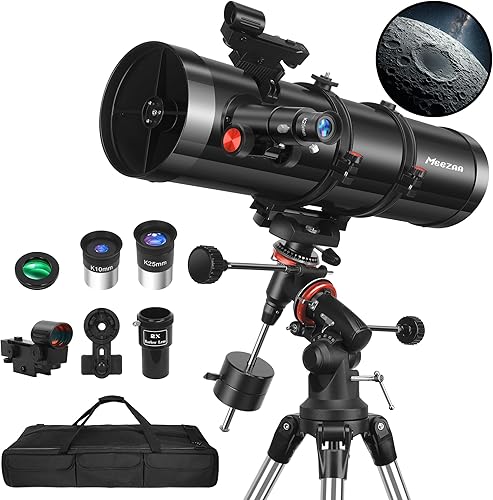
- 2. MEEZAA 150EQ: Best for a larger beginner aperture
- 3. Celestron Cheshire: Best for reflector maintenance
- 4. Gskyer 130EQ: Best for included observing accessories
- 5. SOLOMARK 130EQ: Best for a traditional Newtonian setup
- What aperture is best for a beginner reflector telescope?
- Are equatorial mounts good for beginners?
- How do you care for a beginner reflector telescope?
- Which beginner reflector telescope should you choose?
The best reflector telescope for beginners is the Celestron PowerSeeker 127EQ because it combines a 127mm Newtonian reflector, a manual German equatorial mount and a portable design. MEEZAA is the stronger choice if you want the largest aperture here, while the Celestron Cheshire helps maintain a compatible reflector.
Reflector telescopes use mirrors instead of a front objective lens. That design can provide useful light-gathering ability for viewing the Moon, planets, stars and brighter deep-sky targets, but Newtonian models also require basic alignment care.
If you want a broader list beyond beginner models, compare our best reflector telescopes for astronomy. For a closer look at Newtonian designs, see our guide to the best newtonian reflector telescope.
Our picks at a glance
-
1
 Best for first-time family observing
Celestron PowerSeeker 127EQ Reflector Telescope for Home
9.4/10 our score
See it on Amazon -
2
-
3
 Best for reflector maintenance
Celestron Cheshire Collimation Eyepiece for Reflector
9.3/10 our score
See it on Amazon
- 4
 Check it
Gskyer 130EQ Professional Astronomical Reflector Telescope
Best for included observing accessories - 5
 Check it
SOLOMARK Telescope 130EQ Newtonian Reflector Telescopes
Best for a traditional Newtonian setup
The best reflector telescope for beginners by use
The Celestron PowerSeeker 127EQ is the best all-around starting point here for a first telescope. Its 127mm aperture and portable design suit families who want a real reflector without a large or complicated setup.
MEEZAA is the pick when aperture matters most. Its 150mm mirror is the largest in this group, and the carry bag, phone adapter and moon filter make it a more complete package for regular backyard use.
Gskyer suits buyers who want more in the box from the start. Three eyepieces, a 3x Barlow lens and a wireless phone remote help you try different views and simple phone photos without buying extras first.
SOLOMARK suits buyers who prefer a traditional 130mm Newtonian layout. Its German equatorial mount, adjustable tripod and moon filter support a classic manual observing routine at home.
The Celestron Cheshire covers maintenance rather than observing. It fits 1.25 in focusers or diagonals and helps you keep a Newtonian reflector aligned after travel or storage.
Our score weighs specifications, features and buyer feedback against beginner needs. Each product also brings a trade-off, from manual tracking practice to reflector care, so check the section for your priority before you decide.
The order below follows score from highest to lowest. Use it as a shortlist first, then compare aperture, weight, mount controls and included accessories for the way you plan to observe.
How we compared beginner reflector telescopes
Aperture was the first comparison point because it affects how much light the telescope can gather. The five products here range from the PowerSeeker's 127mm aperture to MEEZAA's 150mm aperture.
Mount stability was the second factor. Every complete telescope in this group uses an equatorial mount, so beginners should expect to learn manual pointing and tracking rather than press a button for automatic movement.
Maintenance also matters. A Newtonian reflector can need collimation, which means aligning its mirrors.
The Celestron Cheshire is included because a beginner-friendly reflector setup should account for this care instead of treating the telescope as maintenance-free.
Finally, we considered setup and storage. A carry bag can help with the MEEZAA, while the Gskyer's stated 30.1 lb weight may matter if you plan to move the telescope often.
| Product | Best for | Aperture | Focal length | Mount | Our score |
|---|---|---|---|---|---|
| Celestron PowerSeeker 127EQ Reflector Telescope for Home | first-time family observing | 127mm | 1000mm | Manual German equatorial | 9.4 |
| MEEZAA Telescope | a larger beginner aperture | 150mm | 650mm | Equatorial mount | 9.4 |
| Celestron Cheshire Collimation Eyepiece for Reflector | reflector maintenance | 9.3 | |||
| Gskyer 130EQ Professional Astronomical Reflector Telescope | included observing accessories | 130mm | 650mm | EQ-130 equatorial | 9.2 |
| SOLOMARK Telescope 130EQ Newtonian Reflector Telescopes | a traditional Newtonian setup | 130mm | 650mm | German equatorial | 7.9 |
1. Celestron PowerSeeker 127EQ: Best for first-time family observing
Celestron PowerSeeker 127EQ Reflector Telescope for Home: Best for first-time family observing
- 127mm Newtonian reflector
- Manual German equatorial mount
- 20mm and 4mm eyepieces
- 3x Barlow lens
The 127mm Newtonian reflector gives beginners a useful balance of light gathering and portability. Its manual equatorial mount and slow-motion control support learning to follow objects across the sky.
Pros
- 127mm aperture
- Slow-motion controls
- Compact and portable design
Cons
- Manual setup requires learning the mount
- Reflector mirrors need alignment care
The Celestron PowerSeeker 127EQ is the best reflector telescope for beginners who want a balanced first setup. Its 127mm Newtonian reflector offers light-gathering ability for the Moon, planets, distant stars and the Orion Nebula.
The manual German equatorial mount includes a slow-motion altitude rod. That gives you a way to make small pointing adjustments and follow objects as they appear to drift across the sky.
The telescope has a 1000mm focal length and manual focus. It includes 20mm and 4mm eyepieces, a 3x Barlow lens and a finderscope, giving you several ways to start learning different views.
Its compact and portable design suits a backyard, campsite or darker observing site. It is also a practical family choice when adults and kids will share the telescope, but the equatorial mount still needs a patient first setup.
Choose the PowerSeeker if you want the clearest balance of aperture, mount controls and portability. For a closer product discussion, read our omega reflector telescope review.
2. MEEZAA 150EQ: Best for a larger beginner aperture
MEEZAA Telescope: Best for a larger beginner aperture
- 150mm aperture
- 650mm focal length
- 26x to 130x magnification
- Carry bag and phone adapter
MEEZAA gives beginners the largest aperture in this group, along with a tripod, carry bag, phone adapter and moon filter. Its equatorial mount includes slow-motion controls for manual tracking.
Pros
- Largest aperture here
- Carry bag included
- Phone adapter and moon filter included
Cons
- More equipment to learn
- Manual focus and tracking still require practice
MEEZAA is the best choice here when 150mm aperture is your main priority. Its 650mm focal length and 150mm aperture are suited to observing the Moon, planets and deep-space targets under clear, dark skies.
The equatorial mount has precision dials and slow-motion control knobs for manual tracking. Beginners can use those controls to practice keeping an object in view as the night sky changes.
The package includes 25mm and 10mm eyepieces, a 2x Barlow lens, a red dot finderscope, a moon filter, a phone adapter, a tripod, instructions and a large carry bag. The stated magnification range is 26x to 130x.
That larger aperture comes with more equipment to assemble and learn. The heavy-duty stainless steel tripod and carry bag help with storage and travel, but you should still plan a stable, level observing location.
Choose MEEZAA if you want the most aperture in this roundup and value the included carry bag and phone adapter. Choose the PowerSeeker if a more compact beginner setup matters more.
3. Celestron Cheshire: Best for reflector maintenance
Celestron Cheshire Collimation Eyepiece for Reflector: Best for reflector maintenance
- Precise Newtonian collimation
- Fits 1.25 in focusers or diagonals
- Cheshire alignment tool
- 4.8 oz weight
This collimation eyepiece helps beginners align Newtonian optics with a crosshair and viewing opening. It is an accessory for maintaining a reflector, not a complete telescope.
Pros
- Made for precise Newtonian collimation
- Fits 1.25 in focusers
- Lightweight
Cons
- Does not replace a telescope
- Useful only when alignment is needed
The Celestron Cheshire Collimation Eyepiece is the best maintenance choice for beginners who buy a Newtonian reflector and want a more precise alignment tool. It is not a complete telescope, so pair it with a compatible reflector rather than treating it as an observing scope.
The tool fits telescopes with 1.25 in focusers or diagonals. Its small opening and thin crosshairs help you inspect the alignment of Newtonian optics.
Collimation is part of owning a reflector telescope because mirror alignment affects the telescope's optical performance. A Cheshire tool gives you a more exact approach than a simple collimation tool.
At 4.8 oz, it is light enough to store with your telescope accessories. Its model name is 94182, and it is designed for precise Newtonian collimation as well as helpful alignment work with Schmidt-Cassegrain telescopes.
Choose this accessory if maintenance is part of your beginner plan. It is especially useful for someone who wants to understand how a reflector stays aligned rather than only setting it up and observing.
4. Gskyer 130EQ: Best for included observing accessories
Gskyer 130EQ Professional Astronomical Reflector Telescope: Best for included observing accessories
- 130mm aperture
- 650mm focal length
- German equatorial mount
- Wireless remote control
Gskyer combines a 130mm reflector with a German equatorial mount, 3 eyepieces, a 3x Barlow lens, a finderscope and an adjustable tripod. The short 24 in optical tube is easier to plan around than a longer tube.
Pros
- 130mm aperture
- Three eyepieces included
- Wireless remote for compatible phones
Cons
- Heavier at 30.1 lb
- Manual focus and equatorial setup take practice
Gskyer is the best beginner reflector here for buyers who want a broad accessory package with a 130mm aperture. Its 650mm focal length, 24 in optical tube and German equatorial mount create a setup aimed at lunar, planetary and brighter deep-sky viewing.
The telescope includes 3 eyepieces, a 3x Barlow lens, a finderscope and an adjustable tripod. A wireless remote control can pair with an iPhone or Android device through Bluetooth for taking pictures or videos.
Its toothless focusing base is designed for straightforward manual operation. The German EQ-130 mount also provides a way to practice manual tracking as celestial objects move across the sky.
The main trade-off is portability. Gskyer's stated weight is 30.1 lb, so moving it from storage to an observing site takes more planning than a lighter setup.
Choose Gskyer if the included eyepieces, Barlow lens and phone remote matter to you. If you want a lighter family telescope, the PowerSeeker has a stronger portability case.
5. SOLOMARK 130EQ: Best for a traditional Newtonian setup
SOLOMARK Telescope 130EQ Newtonian Reflector Telescopes: Best for a traditional Newtonian setup
- 130mm aperture
- 650mm focal length
- German equatorial mount
- 1.5x Barlow lens and moon filter
SOLOMARK offers a 130mm Newtonian reflector with a German equatorial mount, adjustable aluminum alloy tripod and smartphone adapter. It suits beginners who want manual tracking and a traditional reflector layout.
Pros
- 130mm aperture
- Adjustable tripod
- Moon filter and smartphone adapter included
Cons
- 1.5x Barlow gives less added magnification than some picks
- Manual tracking needs practice
SOLOMARK gives beginners a traditional 130mm Newtonian reflector with a 650mm focal length and a German equatorial mount. The large aperture is intended to collect more light for brighter views of deep-space objects, while the mount supports manual tracking.
The setup includes 2 eyepieces, a 1.5x erecting Barlow lens, a 1.25 in 13% transmission moon filter and a cellphone adapter. Its adjustable aluminum alloy tripod has a tray for storing small accessories during an observing session.
The fully coated glass optics are part of the optical system, and the telescope uses manual focus. The equatorial mount has a dial and fine-tuned control cables for positioning and tracking celestial objects.
The 1.5x Barlow gives less added magnification than the 2x and 3x Barlow options in this comparison. That may matter if you want the accessory package to cover a wider range of magnification choices.
Choose SOLOMARK if you want a 130mm Newtonian with a manual German equatorial mount and phone adapter. For a different 150mm reflector comparison, see our omni xlt 150 telescope review.
What aperture is best for a beginner reflector telescope?
Aperture is the diameter of the telescope's main mirror, and it affects light gathering. The 127mm PowerSeeker is already large enough to make the Moon and planets useful targets, while the 130mm Gskyer and SOLOMARK offer a small step up.
MEEZAA has the largest aperture here at 150mm. That makes it the strongest choice on aperture alone, but aperture does not decide everything.
A telescope that is hard to carry or set up may get used less often.
You should also compare focal length. MEEZAA, Gskyer and SOLOMARK each use a 650mm focal length, while the PowerSeeker uses 1000mm.
The focal length affects the telescope's viewing characteristics and the magnification produced by each eyepiece.
For a closer look at aperture and beginner expectations, read Is an 8 Inch Telescope Good for Beginners?. An 8 in telescope is a separate size question, so do not choose one only because the aperture number sounds larger.
Are equatorial mounts good for beginners?
Equatorial mounts can be good for beginners who are willing to learn manual tracking. The products in this comparison use equatorial mounts with dials, slow-motion controls or control cables that help you make small adjustments.
That learning curve is the main trade-off. An equatorial mount asks you to point the telescope in two directions and then follow the sky as it moves, rather than simply moving the tube up and down and side to side.
Start by placing the tripod on a flat surface and tightening the adjustment points. Level legs and a firm stance reduce vibration, and they make small corrections through the controls easier to judge.
Keep the telescope balanced before you loosen anything. A balanced tube feels steadier in the mount, and it is less likely to shift when you move from one target to the next.
Practice pointing at a bright target before trying to follow a faint one. The Moon is a forgiving first target because it is easy to find and it shows whether your focus and tracking are working.
Use the slow-motion controls for small moves. Quick swings can knock the view off target, while gentle turns let you keep a planet or the Moon in the field as it drifts.
Avoid touching the optical tube while viewing. Even a light touch can send the image shaking, and the view may need a moment to settle after each adjustment.
Give the setup a little time before you judge the image. Let the tripod settle, refocus with a smooth hand, and then make one small tracking correction at a time.
Our guide on How to Use a Telescope for Beginners: A Beginner’s Guide covers the basic observing process in more detail.
Read it before your first session if the mount terms feel new. It can help you plan the setup in daylight, when tightening bolts and balancing the tube are easier to learn.
How do you care for a beginner reflector telescope?
Store the optical tube and accessories in a dry, protected place. Keep dust and moisture away from the mirrors, eyepieces and mount, and use the telescope's storage options where available.
A carry bag or a closed case helps when the telescope moves between storage and the yard. It shields the tube from bumps, limits dust on the optics, and keeps small eyepieces together.
Newtonian reflectors may need collimation after moving the telescope or when the view suggests the optics are not aligned. Collimation means aligning the mirrors so light lands where it should in the eyepiece.
Use a compatible alignment tool, such as the Celestron Cheshire for telescopes with 1.25 in focusers or diagonals. The Cheshire eyepiece uses an opening and crosshairs to show whether the optics are centred.
Check alignment in a calm setting rather than outside in wind or cold. Good light, a steady surface and patience make the small adjustments easier to see and less likely to turn into a long fiddle.
Do not force adjustment knobs or clean optical surfaces without following the telescope's care instructions. Gentle handling protects coatings and keeps the mount and focuser working as they should.
Keep eyepieces capped when they are not in use. Dust on an eyepiece affects the view quickly, and a cap is the simplest way to reduce it between sessions.
Wipe only what the instructions allow, and use the right method for each part. The goal is to protect the mirrors and keep the mount working smoothly for the next clear night.
Plan a short check after transport as well as before storage. A quick look at alignment and mount tightness can save time when you are ready to observe.
Which beginner reflector telescope should you choose?
Choose the Celestron PowerSeeker 127EQ if you want the best balance of aperture, portability, slow-motion controls and included eyepieces. It suits families and first-time observers who plan to carry the telescope to a yard, campsite or darker site.
Pick MEEZAA if the largest aperture and carry bag matter most. Its 150mm mirror, phone adapter and moon filter make it a stronger choice for buyers who want more light gathering and a tidy way to store the kit.
Choose Gskyer for its larger accessory package and wireless phone remote. Three eyepieces and a 3x Barlow lens give you more options for the Moon, planets and brighter deep-sky targets, though its stated weight means you should plan for moving it.
Choose SOLOMARK for a traditional 130mm Newtonian setup. Its German equatorial mount, adjustable tripod, moon filter and phone adapter suit a buyer who wants manual tracking in a familiar reflector layout.
Add the Celestron Cheshire when precise reflector alignment is part of your maintenance plan. It fits telescopes with 1.25 in focusers or diagonals, so check compatibility before you treat it as an essential extra.
For first use, think about where you will observe most often. A telescope that stays near the door and sets up on level ground is more likely to be used on clear nights.
Learn the mount in daylight first, then take the telescope out when the Moon is up. That order reduces frustration and helps you focus on the view rather than the hardware.
A beginner reflector telescope works best when its aperture, mount and care needs match your observing habits. Start with the telescope you can set up steadily and use often, then learn collimation as part of owning a Newtonian reflector.
If you are unsure between two models, compare weight, included accessories and how each mount is controlled. Those practical points often matter more than a small difference in aperture on paper.
Our top 3 picks at a glance
-
1
Best for first-time family observing
Celestron PowerSeeker 127EQ Reflector Telescope for Home
9.4/10 our score
See it on Amazon -
2
-
3
Best for reflector maintenance
Celestron Cheshire Collimation Eyepiece for Reflector
9.3/10 our score
See it on Amazon
Frequently asked questions
What is the best reflector telescope for beginners?
The Celestron PowerSeeker 127EQ is the best reflector telescope for beginners in this comparison because it combines a 127mm Newtonian reflector with a manual German equatorial mount, slow-motion control, a finderscope, 2 eyepieces and a 3x Barlow lens.
Choose MEEZAA if a 150mm aperture matters more than a smaller setup.
Is a reflector telescope good for beginners?
Yes. A reflector telescope can give beginners useful light-gathering ability for viewing the Moon, planets, stars and brighter deep-sky objects.
The trade-off is maintenance.
Newtonian reflectors may need collimation, so beginners should learn basic mirror alignment and keep the optical tube protected when it is stored.
What aperture should a beginner reflector telescope have?
A beginner reflector telescope should generally have enough aperture to make the Moon, planets and brighter deep-sky objects useful targets. The models here range from 127mm to 150mm, with the larger aperture offering more light-gathering potential.
Aperture is only part of the decision.
Mount stability and ease of setup also affect how often you'll use the telescope.
Do reflector telescopes need maintenance?
Reflector telescopes need basic care, including protected storage and occasional collimation. Collimation aligns the Newtonian mirrors so the telescope can form a sharper view.
A Cheshire tool such as the Celestron Cheshire Collimation Eyepiece can help with precise alignment when the telescope uses a compatible 1.25 in focuser or diagonal.
Is an equatorial mount hard for beginners?
An equatorial mount takes more practice than a simple tabletop or alt-azimuth mount because its controls are designed to follow the sky's apparent movement. Slow-motion controls can make manual tracking easier after you learn the basic setup.
Keep the tripod level and tighten the adjustment points before observing.