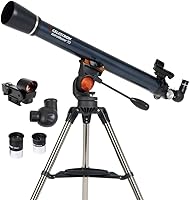
6 Best Refractor Telescope for Astrophotography (November 2026)
The best refractor telescopes for astrophotography include the Dianfan Telescope for beginner visual astronomy, the MEEZAA Telescope for family stargazing, and the HUGERSTAR Telescope for lunar phone photos.
On this page (3 sections)
The best refractor telescope for astrophotography here is the Askar 71F, because its self-flattened quadruplet APO design reduces the need for extra field-correction hardware. That matter of design sits at the heart of this roundup, since imaging work asks more from a telescope than a quick look through an eyepiece.
Astrophotography places different demands on a telescope than visual observing. Color correction, focal length, field coverage, focuser control and mount tracking all matter, so the largest aperture is not automatically the best imaging choice.
For a first purchase, it helps to separate what you plan to do most often. A scope that feels simple and rewarding at the eyepiece may still need a different mount before it can hold stars steady during a longer camera exposure.
The Askar 71F points toward the imaging end of this list. Its 71mm aperture and 493.9mm focal length give a wider framing for deep-sky targets, while its self-flattened design removes one separate accessory from the planning.
Choose the SVBONY SV503 for an ED imaging setup with a 0.8X reducer, or choose one of the 90mm refractors if visual observing is your main goal. The SVBONY pairs an 80mm ED tube with field correction, which suits buyers who want sharper stars toward the edges of a frame.
The 90mm models from Dianfan, MEEZAA, HUGERSTAR and Gskyer take a more visual route. They bring useful aperture, eyepieces, tripods and phone adapters, which can make lunar and planetary viewing straightforward for beginners and families.
That split matters when you set a budget. An imaging-ready system includes the optical tube, a mount that can track, a camera connection and the care needed to keep focus stable through a session.
If you're comparing ED optical tubes, see our guide to best ED refractor telescopes. For APO designs, our best apochromatic refractor telescope guide explains why extra lens elements can matter.
Use those guides to check whether color correction and field flatness fit your camera sensor. A larger sensor can show edge problems sooner, so the optical design deserves attention before you compare aperture alone.
Our picks at a glance
-
1

-
2

-
3

- 4
 Check it
Gskyer Telescope 600x90mm AZ Astronomical Refractor Telescope
Best for wider visual views - 5
 Check it
Askar 71F Flat-Field Telescope
Best for portable deep-sky imaging - 6
 Check it
SVBONY SV503 Upgraded ED Refractor Telescope
Best for edge-to-edge ED imaging
Which refractor telescope is best for astrophotography?
The Askar 71F is the best dedicated imaging pick here, while the SVBONY SV503 gives you a flexible ED setup with a reducer and field flattener. The Dianfan, MEEZAA, HUGERSTAR and Gskyer are better fits when visual astronomy comes first.
That distinction is the simplest way to read this list. Two models are optical tubes aimed at camera work, and four are complete visual packages with altazimuth mounts and eyepieces.
Our score weighs specs, features and buyer feedback against what you're shopping for. The 90mm scopes score well for aperture and included accessories, but their altazimuth mounts make them less suitable for long-exposure deep-sky work.
Aperture still matters, yet it is only one part of the result. A 90mm objective can gather plenty of light for the Moon and bright planets, while a smaller ED or APO tube may give cleaner color for camera images.
Focal length also shapes the choice in a practical way. Shorter tubes show more sky, which helps with larger nebulae, while longer tubes frame smaller targets more tightly for visual work.
Mount choice closes the gap between the two groups. Altazimuth mounts are easy for beginners to move by hand, but they do not track the sky in the same smooth way needed for long exposures.
The Askar 71F earns its place through its quadruplet APO design and self-flattened system. Its 493.9mm focal length and 2.5kg tube also make it easier to plan as part of a portable imaging rig.
The SVBONY SV503 takes a different route with ED glass and a 0.8X reducer. That combination can speed up imaging and support sharper stars across the frame when paired with a suitable mount and camera.
If your priority is simple family observing, the 90mm refractors may feel more complete out of the box. Their phone adapters and carry bags add convenience, even though deep-sky photography would still need separate planning.
| Product | Best for | Aperture | Focal length | Mount | Our score |
|---|---|---|---|---|---|
| Dianfan Telescope | beginner visual astronomy | 90mm | 800mm | Altazimuth | 9.7 |
| MEEZAA Telescope | family stargazing | 90mm | 800mm | 9.6 | |
| HUGERSTAR Telescope | lunar phone photos | 90mm | 800mm | Altazimuth | 9.4 |
| Gskyer Telescope 600x90mm AZ Astronomical Refractor Telescope | wider visual views | 90mm | 600mm | Altazimuth | 9.2 |
| Askar 71F Flat-Field Telescope | portable deep-sky imaging | 71mm | 493.9mm | 9.2 | |
| SVBONY SV503 Upgraded ED Refractor Telescope | edge-to-edge ED imaging | 80mm | 560mm | 8.6 |
Dianfan Telescope: Best for beginner visual astronomy
- 90mm aperture
- 800mm focal length
- 32X–240X magnification
- Stainless steel tripod and phone adapter
The Dianfan combines a 90mm objective with an 800mm focal length and beginner-focused accessories. It suits visual observing first, with a phone adapter for simple lunar images.
Pros
- Large 90mm aperture
- Phone adapter included
- Carrying bag included
Cons
- Altazimuth mount is less suited to long-exposure tracking
- Manual focus
The Dianfan Telescope is a beginner-friendly 90mm refractor with an 800mm focal length. That combination gives you a substantial objective for visual astronomy while keeping the optical design simple.
Its two eyepieces and 3X Barlow lens provide a stated range of 32X to 240X. The stainless steel tripod, carrying bag and phone adapter make it convenient for backyard sessions, travel and basic smartphone images.
The 90mm aperture gathers more light than smaller beginner refractors, but the 800mm focal length gives a narrower view than a shorter imaging tube. That makes it more natural for the Moon and brighter targets than wide nebula framing.
The altazimuth mount is suitable for manually following objects as they move across the sky. For long-exposure astrophotography, you would need to consider a separate tracking mount and the camera connection before buying.
In daily use, the longer focal length rewards patience. You will spend more time finding a target and keeping it centered, so the finder scope and a steady tripod matter from the first night.
Setup is aimed at beginners, with clear instructions and smooth focusing to help you settle into the routine. Let the tube reach the outdoor temperature before you judge the view, since sudden thermal changes can soften the image.
Care is simple but worth doing well. Keep the objective capped in its bag, avoid touching the coated lens and store the tripod where it will not take a knock.
This model suits adults and families who want visual astronomy first. It can support basic phone captures of the Moon, yet it should not be treated as a complete deep-sky imaging system.
MEEZAA Telescope: Best for family stargazing
- 90mm aperture
- 800mm focal length
- Fully multi-coated optics
- 10mm and 25mm eyepieces with 3X Barlow lens
The MEEZAA offers the same useful 90mm and 800mm pairing with a stainless steel tripod, phone adapter and carry bag. It is a practical choice for shared backyard observing.
Pros
- Fully multi-coated optical glass
- Two eyepieces and 3X Barlow lens
- Adjustable stainless steel tripod
Cons
- Altazimuth mount limits tracking for long exposures
- Manual focus
The MEEZAA Telescope is another 90mm, 800mm refractor aimed at astronomy beginners and family stargazing. Its fully multi-coated optical glass, stainless steel tripod and included carry bag cover the main needs of a simple observing setup.
The 10mm and 25mm eyepieces work with the 3X Barlow lens for stated magnifications from 32X to 240X. A phone adapter supports casual photos and videos, but a smartphone adapter does not replace the stable tracking and camera control needed for deep-sky exposures.
The adjustable tripod spans 28 to 46 inches, which gives you room to set a comfortable viewing height. Place any altazimuth tripod on flat ground, tighten the adjustment points and avoid windy conditions.
For shared use, that height range is a real help. Children and adults can take turns without bending over the eyepiece, and the accessory tray keeps spare eyepieces within reach.
The fully multi-coated glass is intended to improve image brightness and clarity. Coatings do not remove the effects of poor seeing, so calm air and a clear sky will still shape what you see.
Start with the lower magnification to find a target, then move upward once the view is steady. High power can make the image darker and more sensitive to vibration, especially on a breezy night.
If you're still deciding whether a lens-based telescope suits your experience level, read Is a Refractor Good for a Beginner? What to Know.
HUGERSTAR Telescope: Best for lunar phone photos
- 90mm aperture
- 800mm focal length
- Moon filter
- Phone adapter and 5x24 finder scope
The HUGERSTAR adds a moon filter and phone adapter to a 90mm, 800mm refractor setup. It fits buyers who want comfortable lunar viewing and simple smartphone captures.
Pros
- Moon filter included
- 5x24 finder scope
- Adjustable stainless steel tripod
Cons
- Altazimuth mount is not an imaging equatorial mount
- Manual focus
The HUGERSTAR Telescope is a 90mm, 800mm refractor with a moon filter, phone adapter and 5x24 finder scope. Those accessories make it especially useful for lunar viewing and simple phone photography.
The moon filter is intended for reducing glare during Moon observation. The two eyepieces and 3X Barlow lens provide a stated 32X to 240X range, although high magnification still depends on steady air, careful focus and a stable tripod.
Its stainless steel tripod adjusts from 28.7 to 46.4 inches and includes an accessory tray. The included carrying bag helps with storage and transport, while the altazimuth mount keeps operation straightforward for visual use.
The finder scope earns its place during target finding. A narrow main tube can make it easy to lose a small object, so aligning the finder first saves time at the eyepiece.
The moon filter suits the brightest lunar nights, when contrast can wash out fine detail. It is a small accessory, yet it can make a long session more comfortable for the eyes.
Daytime use is also part of the appeal, with the same upright views helping for distant terrestrial targets. Keep the solar safety rules in mind and never use this type of setup for direct solar viewing.
Use this model for the Moon, planets and daylight targets when you value included accessories. For tracked deep-sky photography, plan the mount and camera system separately.
Gskyer Telescope 600x90mm AZ Astronomical Refractor Telescope: Best for wider visual views
- 90mm aperture
- 600mm focal length
- 24X, 60X and 120X eyepieces
- 6x30 finderscope
The Gskyer uses a shorter 600mm focal length than the other 90mm choices, giving it a wider visual framing. Its package includes three eyepieces, a 3X Barlow lens and a 6x30 finderscope.
Pros
- 90mm aperture with 600mm focal length
- Three eyepieces
- Adjustable aluminum tripod
Cons
- Altazimuth mount limits deep-sky tracking
- Manual focus
The Gskyer Telescope 600x90mm AZ Astronomical Refractor Telescope uses a 90mm aperture and a shorter 600mm focal length. That shorter focal length gives a wider framing than the 800mm models, which can help when you want more sky around a target.
The package includes 24X, 60X and 120X eyepieces, a 3X Barlow lens, a 6x30 finderscope, an erecting BAK7 prism and an adjustable aluminum tripod. It is a broad visual package for lunar, planetary and terrestrial viewing.
The 600mm focal length is also closer to the range many beginners consider for larger deep-sky targets. Still, the altazimuth mount is the limiting factor for long exposures because the sky's movement causes field rotation and star trails.
Choose this refractor when wider visual views and a complete accessory set matter more than an imaging-ready mount. Keep the tripod on stable, flat ground and focus manually before attaching a phone or camera.
Askar 71F Flat-Field Telescope: Best for portable deep-sky imaging
- 71mm aperture
- F6.9 ED glass refractor
- Quadruplet air-spaced APO design
- Self-flattened optical system
The Askar 71F is the strongest imaging-focused option for buyers who want a portable APO refractor without adding a separate flattener. Its 493.9mm focal length suits wider deep-sky framing.
Pros
- Self-flattened design
- Quadruplet APO lens with ED glass
- 2.5kg optical tube
Cons
- Smaller aperture than the 90mm visual scopes
- Mount and camera setup are separate decisions
The Askar 71F Flat-Field Telescope is the best match for a portable deep-sky imaging setup. It combines a 71mm aperture, 493.9mm focal length, F6.9 ED glass refractor and quadruplet air-spaced APO design.
Its self-flattened optical system is the key advantage for imaging. The design is intended to avoid buying an additional flattener, while the 360-degree field rotator helps with camera composition after the imaging accessories are attached.
The optical tube weighs 2.5kg, with a total weight of 3kg including the tube rings and dovetail plate. That is easier to carry than a larger refractor, but you still need to match the tube and camera load to a suitable tracking mount.
The Askar also supports visual astronomy and daytime viewing. Its dual-speed focuser has 1:10 fine adjustment, giving you more control when you are trying to bring small stars into focus.
For a deeper comparison of larger imaging instruments, see Best Telescopes for Deep Sky Astrophotography.
SVBONY SV503 Upgraded ED Refractor Telescope: Best for edge-to-edge ED imaging
- 80mm aperture
- F7 ED refractor
- 0.8X focal reducer and field flattener
- Dual-speed focuser with 1:10 adjustment
The SVBONY SV503 pairs an 80mm ED refractor with a 0.8X focal reducer and field flattener. It is aimed at deep-sky imaging where shorter exposures and sharp stars across the frame matter.
Pros
- ED glass reduces chromatic aberration
- Field flattener supports edge sharpness
- Dual-speed focuser
Cons
- No finderscope
- Mount and camera are not included
The SVBONY SV503 Upgraded ED Refractor Telescope is built around an 80mm F7 ED optical tube with a 0.8X focal reducer and field flattener. The combination gives you a shorter effective imaging system and helps keep stars sharp from the center toward the edge.
The S-FPL51 ED glass is intended to reduce chromatic aberration, which can help produce cleaner stars and highlights than a basic achromatic refractor. Its 2-inch dual-speed focuser provides 1:10 micro-adjustment for careful focusing.
The field flattener is especially useful when your camera sensor shows stretched stars near the corners. The reducer also increases field coverage and can shorten the exposure time needed to gather a similar amount of signal.
At 2.5kg, the optical tube is portable, but it does not include a finderscope. You must choose the tracking mount, camera and any remaining imaging connections as part of the full system.
If you're comparing this model with another SVBONY tube, read SVBONY SV48P vs SV503: Which Should You Choose?. A detailed SVBONY SV550 122mm review can also help if you are considering a larger imaging refractor.
How do you choose a refractor telescope for astrophotography?
Choose the optical design first, then check the focal length, field correction and mount. A good refractor telescope for astrophotography must work as a complete imaging system, not just as a clear optical tube.
ED or APO glass for color correction
ED glass helps reduce chromatic aberration, the color fringe that can appear around bright stars and high-contrast objects. The SVBONY SV503 uses S-FPL51 ED glass, while the Askar 71F uses a quadruplet APO design with ED glass.
The 90mm Dianfan, MEEZAA, HUGERSTAR and Gskyer models use fully coated or fully multi-coated optics, but their data does not identify them as ED or APO systems. They can still work well for visual astronomy and basic Moon photography, but color correction should be part of your decision.
Focal length and field coverage
Shorter focal lengths show more sky and make larger targets easier to frame. The Askar 71F is 493.9mm, the Gskyer is 600mm, and the SVBONY SV503 is 560mm before its 0.8X reducer.
The 800mm Dianfan, MEEZAA and HUGERSTAR scopes frame smaller targets more tightly. That can suit the Moon and planets, but their altazimuth mounts are not intended to provide the same long-exposure tracking workflow as a dedicated imaging mount.
Flat fields and camera sensors
A flat field keeps stars more consistent across the image. The Askar 71F uses a self-flattened design, while the SVBONY SV503 combines a field flattener with a 0.8X focal reducer.
If you use another refractor, check whether your camera needs a separate flattener and whether the focuser has enough travel for your camera connection. The camera sensor size also changes how wide the final image appears.
Mounting demands
A tracking mount is usually the most important extra decision for deep-sky astrophotography. The Askar 71F and SVBONY SV503 are optical tubes, so you must pair them with a mount that can carry the full imaging load.
The Dianfan, MEEZAA, HUGERSTAR and Gskyer use altazimuth mounts included with their packages. Those mounts are convenient for visual observing, but they are not a substitute for an equatorial tracking setup during long exposures.
Setup and care
Start on a calm, clear night with low humidity and little light pollution. Let the telescope reach the outdoor temperature, keep the optical surfaces capped when not in use and avoid touching the lenses.
Use the lowest useful magnification while locating a target, then focus carefully. For camera work, secure every connection, balance the mount and take short test exposures before committing to a longer sequence.
Choose a site with firm, level ground and room to move around the tripod. A small slope or soft soil can make the view drift, and it can also make a camera setup harder to keep aligned.
Light pollution deserves a practical plan rather than frustration. Brighter objects such as the Moon and planets remain visible in towns, while faint nebulae need darker surroundings for a fair test.
Wind matters more than many beginners expect. Even a light breeze can shake a tall tripod, so shelter the setup where you can and pause when gusts pass through.
Focus is a skill that improves with repetition. Take your time with the focuser, check at the edges of bright stars and resist the urge to chase the highest magnification too soon.
Care during the session is simple. Keep dew from settling on the lens, handle eyepieces by their barrels and return caps before carrying the tube indoors.
For imaging, build the system step by step. Confirm that the camera connection is secure, that the mount is balanced and that test frames show the framing you want before a longer run.
New to telescope setup? How to Use a Telescope for Beginners: A Beginner’s Guide covers basic focusing, tripod placement and target finding.
Which refractor telescope should you buy?
Choose the Askar 71F if you want the most imaging-focused design here, with a self-flattened APO optical system and a portable 493.9mm focal length. Its quadruplet design with ED glass is meant to reduce color fringing and remove the need for a separate flattener.
Choose the SVBONY SV503 if ED glass, a 0.8X reducer and edge-to-edge field correction are your priorities. The reducer shortens the effective focal length, which can widen the field and reduce the exposure time needed for a given target.
Pick the Gskyer for a shorter 600mm visual refractor with a broad accessory package. Its three eyepieces, 3X Barlow lens and 6x30 finderscope give a beginner a flexible kit for lunar, planetary and terrestrial viewing.
Choose the Dianfan, MEEZAA or HUGERSTAR when 90mm visual aperture, beginner setup and phone-based lunar photography matter more than tracked deep-sky exposures. Each pairs an 800mm focal length with an altazimuth mount, so they reward simple manual observing.
The HUGERSTAR adds a moon filter and finder scope, which can make lunar sessions more comfortable. The Dianfan and MEEZAA focus on the same core setup with tripods, carry bags and phone adapters for easy transport.
Mount choice should settle the decision.
Care and site choice will affect every option. A calm, dark night, a firm tripod placement and careful focusing will do more for the view than pushing magnification past what the air allows.
For larger and more specialized options, compare Best High End Refractor Telescopes. The right refractor telescope for astrophotography is the one whose optical design, field coverage and mount all match the camera targets you plan to capture.
Our top 3 picks at a glance
-
1
-
2
-
3
Frequently asked questions
What is the best refractor telescope for astrophotography?
The Askar 71F is the best refractor telescope for astrophotography here because its 71mm ED quadruplet APO design is self-flattened and built around a 493.9mm focal length. The SVBONY SV503 is another strong choice when you want an 80mm ED system with a 0.8X focal reducer and field flattener.
Are refractor telescopes good for astrophotography?
Yes, refractor telescopes can be very effective for astrophotography because their optical tubes use lenses and need no secondary mirror obstruction. ED and APO designs can reduce color fringing, while a field flattener helps keep stars sharp toward the edges of a camera sensor.
What focal length is best for a refractor telescope for astrophotography?
A focal length around 400mm to 600mm is a flexible starting point for many deep-sky targets. The Askar 71F is 493.9mm, the SVBONY SV503 is 560mm before its 0.8X reducer, and the Gskyer is 600mm.
Longer focal lengths frame smaller targets more tightly.
Do refractor telescopes need a field flattener?
A field flattener can reduce star distortion near the edge of an image, especially with larger camera sensors. The Askar 71F uses a self-flattened design, while the SVBONY SV503 includes a 0.8X field flattener and reducer.
Other refractors may need a separate accessory.
What mount does astrophotography with a refractor need?
Deep-sky astrophotography needs a mount that can track the sky smoothly during long exposures. The 90mm Dianfan, MEEZAA, HUGERSTAR and Gskyer models here use altazimuth mounts for visual observing, while the Askar and SVBONY optical tubes require you to choose a suitable imaging mount.