5 Best Astronomy Binoculars for Beginners (November 2026)
The best astronomy binoculars for beginners include the Celestron SkyMaster 15x70 Astronomy Binoculars for Stargazing for balanced deep-sky viewing, the Sogries 20x80 Astronomy Binoculars for Adults High for bright high-power views, and the Sogries 25x100 Astronomy Binoculars for Stargazing High for maximum reach.
On this page (4 sections)
The best astronomy binoculars for beginners are the Celestron SkyMaster 15x70, which combines 15x magnification, 70mm objective lenses, BaK-4 prisms, and a built-in 1/4-20 tripod adapter. That mix suits a beginner who wants real reach for the Moon and deep sky objects without starting with the heaviest option in this group.
Choose the Celestron Cometron 7x50 for easier handheld scanning, or choose a Sogries model for larger objectives and higher magnification. The right pick comes down to how you plan to observe most often and how much support you are willing to carry to your viewing spot.
Astronomy binoculars can be easier to learn with than a telescope because you look through both eyes and can scan a broad area of sky. That wider view helps you find your bearings among bright stars and large patterns before you try to study smaller targets.
For a dual-use shortlist, see binoculars for stargazing and bird watching. A pair that works after dark may also work during the day, but the balance of weight and magnification changes with each task.
The right choice depends on how steadily you can hold the binoculars, how much reach you want, and whether you have a tripod. Higher magnification shows more detail, yet it also makes small movements easier to notice during a session.
Low power binoculars are more forgiving when you are still learning where objects sit in the sky. Larger models reward patience and a stable mount with brighter views of fainter targets.
For a wider overview of choosing optics, see our complete guide to what binoculars to buy. That guide can help you think through size and use before you narrow the choice to astronomy models.
If you are also considering a telescope, our Stargazing for Beginners: A Beginner’s Guide covers the first steps for learning the night sky. Reading both can make the choice clearer if you are unsure which tool fits your time and space.
Beginners often do best when the first pair is easy to set up and pleasant to use. A model that invites regular use will teach you more than a larger pair that stays packed away.
Think about your normal viewing place as you decide. A balcony, a dark field, and a tripod each point toward a different size and weight.
Ease of use matters as much as power on the first clear night. Comfort, focus, and a steady view all shape how long you will want to watch.
Our picks at a glance
-
1
 Best for balanced deep-sky viewing
Celestron SkyMaster 15x70 Astronomy Binoculars for Stargazing
9.5/10 our score
See it on Amazon -
2
 Best for bright high-power views
Sogries 20x80 Astronomy Binoculars for Adults High
9.3/10 our score
See it on Amazon -
3
 Best for maximum reach
Sogries 25x100 Astronomy Binoculars for Stargazing High
9.1/10 our score
See it on Amazon
- 4
 Check it
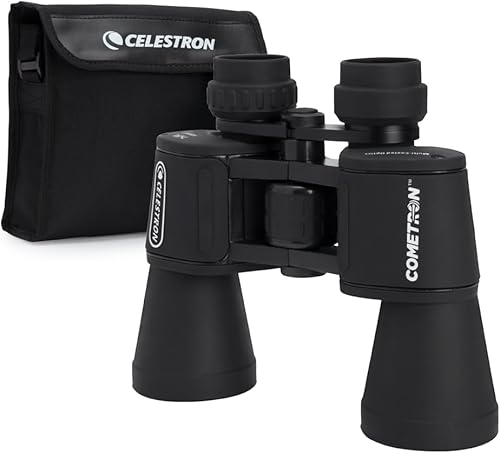
Celestron Cometron 7x50mm Astronomy Binoculars
Best for easy handheld learning - 5
 Check it
Sogries 18x70 Professional Astronomy Binoculars for Adults
Best for tripod-based flexibility
Which astronomy binoculars are best for beginners?
The Celestron SkyMaster 15x70 is the best overall pick for beginners who want a serious astronomy format without moving straight to the largest binoculars. It sits in a middle ground where magnification and objective size feel substantial, while the weight still allows planned use with a tripod.
The Cometron 7x50 is easier to hold, while the Sogries 20x80 and 25x100 models provide more magnification with greater tripod demands. Those larger models suit observers who already know they want a fixed observing position and are ready for the extra care that comes with it.
We compared the objective size, magnification, optical details, weight, tripod support, and practical learning curve. That comparison looks at how each model behaves during real sessions, not only at the numbers on a specification list.
Our score weighs specs, features, and buyer feedback against what you are shopping for. A high score in this guide means a model fits the needs of a beginner looking for astronomy use, with attention to ease of handling and long term usability.
Objective size shapes the amount of light a pair can gather for night viewing. Magnification shapes how large objects appear and how steady the view must be to enjoy them.
Weight shapes how long you can observe comfortably and how you carry the binoculars to your spot. Tripod support can turn a heavy model into a calm and focused tool for study.
The practical learning curve matters because a new observer needs room to practise finding objects. A wider and steadier view can build confidence early in the season.
That is why this group spans light handheld models and large tripod models. Each step up in power asks for a little more planning before you go outside.
| Product | Best for | Magnification | Objective lenses | Weight | Our score |
|---|---|---|---|---|---|
| Celestron SkyMaster 15x70 Astronomy Binoculars for Stargazing | balanced deep-sky viewing | 15x | 70mm | 3.3 lb | 9.5 |
| Sogries 20x80 Astronomy Binoculars for Adults High | bright high-power views | 20x | 80mm | 4.66 lb | 9.3 |
| Sogries 25x100 Astronomy Binoculars for Stargazing High | maximum reach | 25x | 100mm | 8.8 lb | 9.1 |
| Celestron Cometron 7x50mm Astronomy Binoculars | easy handheld learning | 7x | 50mm | 774 g | 9.0 |
| Sogries 18x70 Professional Astronomy Binoculars for Adults | tripod-based flexibility | 18x | 4.7 lb | 8.8 |
Best astronomy binoculars for beginners with balanced power
Celestron SkyMaster 15x70 Astronomy Binoculars for Stargazing: Best for balanced deep-sky viewing
- 15x magnification
- 70mm objective lenses
- BaK-4 prisms
- Built-in 1/4-20 tripod adapter
The 15x70 format gives beginners more reach and light gathering than standard handheld binoculars. Its built-in tripod adapter makes extended astronomy sessions more practical.
Pros
- Strong balance of power and brightness
- BaK-4 prisms
- Tripod adapter included
Cons
- Too heavy for many handheld sessions
- Tripod not included
The Celestron SkyMaster 15x70 Astronomy Binoculars for Stargazing are the strongest all-around choice in this group. Their 15x magnification gives beginners more detail than a 7x model, while the 70mm objective lenses gather light for low-light astronomy.
The BaK-4 prisms and multi-coated optics are suited to brighter, sharper views in dim conditions. The binoculars have a 4.4-degree field of view, 18mm eye relief, and a 4.7mm exit pupil.
At 3.3 lb, the SkyMaster is not a casual pocket binocular. Celestron includes a built-in 1/4-20 tripod adapter, and the binoculars work with a compatible tripod for longer observing sessions.
The rubber-armored housing provides a secure grip, and the exterior is water-resistant. The box includes objective lens caps, a rainguard, neck strap, lens cloth, tripod adapter, carrying case, and instruction manual.
Choose this model if you want one pair that can support a growing interest in astronomy. If you plan to observe only while walking or standing, the weight may make the 7x50 format easier.
Best astronomy binoculars for beginners who want bright views
Sogries 20x80 Astronomy Binoculars for Adults High: Best for bright high-power views
- 20x magnification
- 80mm objective lenses
- BaK-4 prisms
- 1/4 thread tripod mount
The 20x80 design is suited to beginners who want bright views of the Moon, star clusters, and deep-sky targets. A tripod is important because the binoculars weigh 4.66 lb.
Pros
- Large 80mm objectives
- High 20x magnification
- Waterproof construction
Cons
- Heavy for handheld use
- Tripod support is needed for steady views
The Sogries 20x80 Astronomy Binoculars for Adults High are a good fit for beginners who want large objectives and strong magnification. Their 20x power and 80mm objective lenses suit views of the Moon, star clusters, and deep-sky targets.
BaK-4 prisms support light transmission for low-light viewing. The binoculars use manual center focus, have 17mm eye relief, and include a diopter adjustment range of plus or minus 5 diopters.
This model weighs 4.66 lb, so long handheld sessions can strain your arms and neck. The 1/4 thread tripod mount is useful for reducing vibration during stationary observation.
The rubber-armored housing provides a non-slip grip, and the construction is waterproof. A carrying bag is included for transport.
Choose the Sogries 20x80 if brightness and reach matter more than light weight. Beginners who are still learning constellations may find the lower-power Cometron easier for broad sky scanning.
Best astronomy binoculars for maximum magnification
Sogries 25x100 Astronomy Binoculars for Stargazing High: Best for maximum reach
- 25x magnification
- 100mm objective lenses
- Fully multi-coated optics
- BaK-4 prisms
The 25x100 format is for beginners who want the largest optics and highest magnification in this group. At 8.8 lb, it needs a sturdy tripod and a planned observing position.
Pros
- Largest objectives here
- Highest magnification here
- Waterproof and fogproof construction
Cons
- Heaviest option here
- Tripod not included
The Sogries 25x100 Astronomy Binoculars for Stargazing High offer the highest magnification and largest objective lenses in this roundup. The 25x power and 100mm objectives are aimed at long-range viewing, Moon observation, and detailed low-light views.
The classic Porro prism system uses BaK-4 prisms and fully multi-coated optics. The binoculars have a 2.8-degree apparent angle of view, a 4mm exit pupil, and 15.5mm eye relief.
This is a large observing tool at 8.8 lb. A sturdy tripod is essential because the weight and 25x magnification make handheld viewing impractical for most beginners.
The rubber-armored metal housing is waterproof, fogproof, shock resistant, and slip resistant. The box includes a backpack, cleaning cloth, lens cover, and strap.
Choose this model when you have a planned observing place and want the most optical reach here. It is less suitable for quick backyard sessions where you want to pick up the binoculars and scan by hand.
Best astronomy binoculars for beginners learning the sky
Celestron Cometron 7x50mm Astronomy Binoculars: Best for easy handheld learning
- 7x magnification
- 50mm objective lenses
- 6.8-degree field of view
- Built-in tripod adapter socket
The Cometron 7x50 is the easiest beginner format here for scanning constellations and large parts of the sky by hand. Its wide field of view helps new observers learn where objects are located.
Pros
- Steady 7x view
- Wide field of view
- Tripod adaptable
Cons
- Less reach than the larger models
- Tripod adapter not included
The Celestron Cometron 7x50mm Astronomy Binoculars are the easiest model here for learning the sky by hand. The 7x magnification gives a steadier view, and the 6.8-degree field of view helps you scan large areas for constellations, star clusters, comets, and satellites.
The 50mm objective lenses gather more light than smaller daytime binoculars. Multi-coated optics support light transmission, and the 7.1mm exit pupil suits low-light viewing.
The Cometron weighs 774 g and has a built-in tripod adapter socket. The adapter itself is not included, so handheld use is the simplest starting point.
The binoculars have individual focus, plus or minus 3 diopter adjustment, and a close focus of 26.2 ft for daytime viewing. The box includes a carrying case, eyepiece caps, instruction manual, lens cloth, neck strap, and objective lens caps.
Choose this model if you want to learn the sky through broad, steady views. Choose a larger model later if you decide you need more magnification for the Moon and distant targets.
Best astronomy binoculars for tripod-based flexibility
Sogries 18x70 Professional Astronomy Binoculars for Adults: Best for tripod-based flexibility
- 18x magnification
- 70mm objective lens
- Fully multi-coated lenses
- Smartphone adapter included
The 18x70 format sits between the lighter 15x70 and larger 20x80 options. It suits beginners who want high magnification, tripod use, and a smartphone adapter for basic image capture.
Pros
- 18x power with 70mm objectives
- Tripod adapter included
- Smartphone adapter included
Cons
- Too heavy for long handheld use
- Needs stable support at high magnification
The Sogries 18x70 Professional Astronomy Binoculars for Adults sit between the 15x70 and 20x80 choices in this group. Their 18x magnification and 70mm objective lenses offer a high-power format for astronomy and long-distance viewing.
The BaK-4 prisms and fully multi-coated lenses are designed for low-light viewing. The binoculars have a 4.7mm exit pupil, 18mm eye relief, and center focus with plus or minus 5 diopter adjustment.
At 4.7 lb, this model is best used on a tripod. It includes a tripod adapter and a universal smartphone adapter that fits most phones from 2.09 to 3.54 in wide.
The metal barrel has a rubber-armored finish. The product data describes the binoculars as IPX7 waterproof and fogproof, with lens covers and a heavy-duty carrying case included.
Choose this model if smartphone capture and included tripod support matter to you. If you want a lighter learning tool, the Cometron 7x50 is easier to carry and hold.
How to choose astronomy binoculars for beginners
Start with magnification and stability. A 7x binocular is easier to hold steady, while 15x and higher models reveal more detail but work better on a tripod.
Magnification does not act alone in the field. It works with your grip, your stance, and the amount of time you plan to spend on one target.
A lower power view keeps movement less noticeable and makes scanning easier. That can help you learn star patterns without losing your place each time you move.
Objective size affects how much light the binoculars can gather. The 50mm Cometron is the most portable option here, while the 70mm, 80mm, and 100mm models trade portability for larger optics.
Larger objectives can show fainter stars and give a brighter image of the Moon. They also make the body larger, so carrying and mounting need more thought.
Weight matters during every session. The SkyMaster weighs 3.3 lb, the Sogries 20x80 weighs 4.66 lb, the Sogries 18x70 weighs 4.7 lb, and the Sogries 25x100 weighs 8.8 lb.
Those weights change how you plan a night outdoors. A lighter pair can move with you between spots, while a heavier pair works best when you set up once and stay there.
A tripod can improve your view by reducing shake. Before buying, check that your tripod can support the binoculars and that your observing position leaves enough room to aim upward.
A sturdy mount also frees your hands for focus and notes. That matters when you want to compare views or follow the Moon across a field.
Eye relief and exit pupil affect comfort during longer looks. More room behind the eyepiece can help if you wear glasses or want a relaxed face position.
Field of view affects how much sky you see at once. A wider view helps with scanning and learning, while a narrower view comes with higher power.
Think about storage and transport as part of the choice. Larger binoculars need a case that protects the optics and a car or cart plan for local trips.
If you are comparing brands, our Celestron vs Meade binoculars guide explains the main choice points. You can also compare another brand through our guide to the best Nikon binoculars for astronomy.
Set up time should fit your habits on a clear night. A pair you can mount quickly is more likely to be used when you have only a short window of clear sky.
Start with the way you will observe most nights, then work toward the specs that support that habit.
How to use astronomy binoculars for beginners
Begin with a dark location and let your eyes adjust before searching for faint targets. That pause helps you notice dim stars that a bright porch light can wash out at first.
Start with bright objects and large star patterns instead of trying to find a small target immediately. The Moon, bright planets, and familiar constellations give you easy wins while you learn how the controls feel.
Set the binoculars for your eyes before observing. Adjust the spacing between the eyepieces, focus on a bright object, and use the diopter control if your model has one.
Take time with that first focus step each night. A clear starting point makes later changes smaller and keeps the view from drifting out of focus as the air cools.
For handheld viewing, support your elbows against your body and use short observing periods. Resting your arms can steady the image without any gear at all.
Larger models should go on a tripod before you spend time studying the Moon or star clusters. Mounting early avoids tired arms and keeps the view calm for careful study.
Move the binoculars in small steps when you scan. Slow movement helps you keep track of where you have looked and makes it easier to return to a target.
Avoid touching the objective lenses. Use the included lens cloth when needed, replace the caps after viewing, and keep the binoculars in their case during transport.
Dust and dew are common on clear nights, so gentle care protects the view. A soft cloth and the caps do more than a quick wipe with a sleeve.
If you are moving from binoculars to a telescope, read How to Use a Telescope for Beginners: A Beginner’s Guide. For a steadier alternative to a tripod, our guide explains how image stabilized binoculars work.
Keep notes on what you saw and where you looked. Simple notes help you learn patterns faster and show which targets you want to try again.
Wear warm layers and sit where you can stay still for a while. Comfort during the first hour shapes how much you learn on any given night.
Which astronomy binoculars should you buy?
Choose the Celestron SkyMaster 15x70 if you want the best balance of power, brightness, and tripod support. It gives a beginner a serious astronomy format while staying below the weight of the largest models here.
Choose the Celestron Cometron 7x50 if you are new to astronomy and want a steady handheld view with a wide field. That pair suits learning constellations and scanning large parts of the sky without a mount on most nights.
Pick the Sogries 20x80 for bright high-power viewing, the Sogries 25x100 for maximum reach from a fixed observing position, or the Sogries 18x70 for high magnification with a smartphone adapter.
Each of those larger choices asks for a tripod and a planned spot. That planning pays off when you want to study one area for a longer stretch.
The 20x80 suits observers who value large objectives for the Moon and deep sky targets. The 25x100 suits those who want the most reach and have space for a sturdy mount.
The 18x70 suits a beginner who wants tripod use plus a way to try basic phone capture. That mix can be handy for sharing a view with friends after a session.
Before choosing a large model, plan for its weight and tripod needs. Check the mount you own or plan to buy, and leave room at your viewing place to aim upward with ease.
For a closer look at one of the larger options, read our Celestron SkyMaster 20x80 binoculars review. That review can help you judge whether a bigger format fits your habits.
If you are unsure, start with the use you picture most often. Handheld scanning points one way, while long tripod study points another.
A good first pair should make clear nights feel inviting. Choose the model you will actually carry outside and set up with care.
Our top 3 picks at a glance
-
1
Best for balanced deep-sky viewing
Celestron SkyMaster 15x70 Astronomy Binoculars for Stargazing
9.5/10 our score
See it on Amazon -
2
Best for bright high-power views
Sogries 20x80 Astronomy Binoculars for Adults High
9.3/10 our score
See it on Amazon -
3
Best for maximum reach
Sogries 25x100 Astronomy Binoculars for Stargazing High
9.1/10 our score
See it on Amazon
Frequently asked questions
What are the best astronomy binoculars for beginners?
The Celestron SkyMaster 15x70 is the strongest all-around choice in this group because it combines 15x magnification, 70mm objectives, BaK-4 prisms, and a built-in tripod adapter.
Choose the Cometron 7x50 if you want a steadier handheld view and a wide field for learning constellations.
Are 7x50 binoculars good for astronomy beginners?
Yes. 7x50 binoculars are a practical starting point because 7x magnification is easier to hold steady than 15x or 20x power, while 50mm objectives gather useful light for night-sky viewing.
The wider field also helps beginners scan large areas and learn the positions of bright stars and constellations.
Do astronomy binoculars need a tripod?
A tripod is strongly useful once binoculars reach about 15x magnification or have large objectives. The Celestron SkyMaster 15x70, Sogries 20x80, Sogries 25x100, and Sogries 18x70 all suit tripod-based viewing.
The Cometron 7x50 is easier to use by hand, but it can also be mounted for longer sessions.
What size binoculars should beginners choose for astronomy?
Beginners who want simple handheld observing should start with 7x50 binoculars. Choose 15x70 when you want more reach and can use a tripod, or move to 20x80, 18x70, or 25x100 when brightness and magnification matter more than portability.
Our guide to what size binoculars for astronomy explains the trade-offs.