How to Use a Lunarscope Tabletop Telescope
To use a Lunarscope tabletop telescope, place it on a steady, level surface, align the finder, then focus on a distant daytime target before aiming at the Moon. Start with the lowest-power eyepiece and increase magnification only when the view is sharp and steady.
On this page (9 sections)
- How do you set up a Lunarscope tabletop telescope?
- How do you align the finder on a Lunarscope?
- How do you focus on the Moon?
- Which eyepiece should you use for a first lunar view?
- What should your first Moon session look like?
- Can a diagonal or binoculars help with observing?
- What can make the Moon look blurry or shaky?
- How do you care for the eyepieces?
- How do you get comfortable using a Lunarscope?
To use a Lunarscope tabletop telescope, set it on a stable, level surface, align its finder, focus on a distant daytime target, then aim at the Moon. Begin with the lowest-power eyepiece so it’s easier to find and center the lunar disk.
For a tripod-mounted refractor, see the Celestron AstroMaster 70 setup guide.
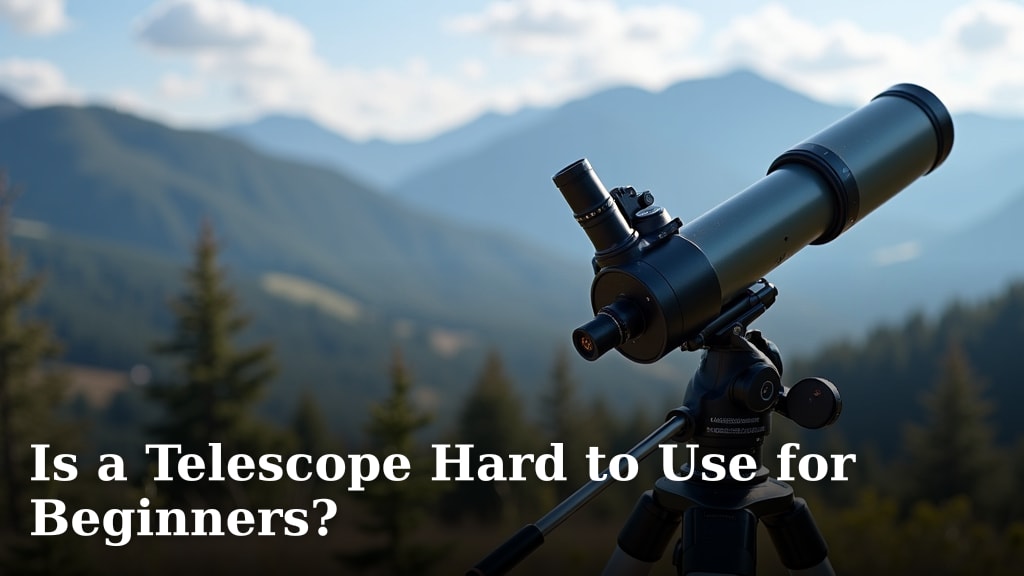
A tabletop telescope works best when the surface doesn’t wobble and the tube can move freely. If you’re new to telescope controls, the broader How to Use a Telescope for Beginners: A Beginner’s Guide covers the same basic aiming and viewing habits.
How do you set up a Lunarscope tabletop telescope?
Place the base on a firm, level surface and make sure the telescope moves smoothly before fitting an eyepiece. A sturdy outdoor table, bench, or solid ground-level platform can work if it keeps the eyepiece at a comfortable height.
Remove dust caps from the telescope’s openings and the eyepiece. Insert the lowest-power eyepiece gently, then secure it with the holder’s screw or clamp without forcing it.
Keep the telescope away from deck boards or tables that shake when you move. Even a small bump can make the Moon drift out of view at higher magnification.
A tabletop telescope may feel simpler than a full tripod setup, but it still needs room to move and a clear view of the sky. See whether a tabletop telescope is good for beginners if you’re deciding whether this style suits your observing space.
How do you align the finder on a Lunarscope?
Center a distant object in the main telescope first, then adjust the finder until it points to the same object. A chimney, rooftop corner, or other stationary object can work in daylight, as long as it’s far away and nowhere near the Sun.
- Set up the telescope and insert the lowest-power eyepiece.
- Aim the tube at a distant object and center it in the eyepiece.
- Look through the finder and adjust its screws or bracket until the object sits at the finder’s crosshair or dot.
- Check the main eyepiece again, then make small corrections if needed.
Don’t use the Sun to align a finder. If you can’t find a safe distant target, wait until night and use a bright object such as the Moon.
Finder alignment makes aiming easier, but the Moon can still take practice to locate if the telescope shifts while you look through the eyepiece. The same center-first approach applies to other models, as described in how to align a Celestron telescope.
How do you focus on the Moon?
Center the Moon with the lowest-power eyepiece, then turn the focus control slowly until the lunar edge looks sharp. Make small turns and pause after each one so the view can settle.
If the image looks like a bright blur, check that the eyepiece is fully seated and that the focuser is moving. A slightly defocused Moon can still show as a large bright patch, so keep adjusting gently rather than changing eyepieces right away.
The Moon’s edge is a useful focus cue. When it looks crisp, look for darker maria, crater rims, and the boundary between lunar day and night.
Which eyepiece should you use for a first lunar view?
Use the eyepiece with the lowest magnification to find and center the Moon. A wider field makes it easier to keep the target in view while you learn how the telescope moves.
After centering, you can try a higher-power eyepiece if the view remains steady. If the image gets dim, soft, or shaky, return to the lower-power eyepiece.
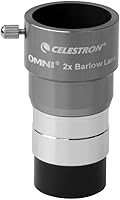
A Barlow lens can increase an eyepiece’s magnification, but more power doesn’t always reveal more detail. The Celestron Omni 1.25" 2X Barlow Lens doubles the magnification of compatible 1.25-inch eyepieces while keeping their eye relief.
Use it only if your telescope accepts a 1.25-inch Barlow and the resulting view stays sharp. If the Moon looks dim or difficult to focus, remove the Barlow and return to the eyepiece alone.
What should your first Moon session look like?
Begin with the full lunar disk, then observe one feature at a time. The Moon’s phases change the angle of sunlight on craters, so features near the day-night boundary often show stronger shadows.
Try this simple sequence:
- Center the Moon with the lowest-power eyepiece.
- Focus on its edge.
- Look for the dark maria, which are broad plains visible to the eye.
- Follow the terminator, the boundary between lunar day and night.
- Increase magnification only if the image stays clear and stable.
You don’t need to rush through the view. Give your eyes a few minutes to adjust and revisit the same feature after the telescope settles.
Can a diagonal or binoculars help with observing?
A diagonal can make viewing more comfortable on compatible telescopes, while binoculars offer a separate wide-field way to explore the Moon and sky. Neither accessory is required to start using a tabletop telescope.
The Celestron 1.25" Star Diagonal for Refractor fits telescopes with a 1.25-inch focuser or visual back and provides a 90-degree viewing angle. It’s designed for refractor or catadioptric telescopes, so check your telescope’s fitting before considering one.
The diagonal shows objects upright but reverses them left to right. Skip it if your tabletop telescope doesn’t accept this type of diagonal.
The Celestron SkyMaster 15x70 Astronomy Binoculars for Stargazing are a different way to scan the sky, with 15x magnification and 70 mm objective lenses. They’re intended to be mounted on a tripod for extended viewing because of their size and weight.
Choose binoculars if you want to scan broad areas of the sky as well as observe the Moon. They don’t replace the telescope’s eyepiece view or its tabletop setup.
What can make the Moon look blurry or shaky?
A soft or moving image usually calls for a lower-power view, steadier support, or a fresh focus adjustment. Atmospheric turbulence can also make the Moon shimmer, even when the telescope is set up correctly.
Check that the base is stable, the eyepiece is seated, and the focus control can move. If the Moon drifts from view, use the finder to re-aim and center it again.
Avoid touching the tube while looking through the eyepiece. Move it gently, then wait for vibration to stop before judging the view.
How do you care for the eyepieces?
Keep eyepieces capped when they aren’t in use and avoid touching the glass. Dust that won’t blow away may need careful cleaning with tools made for optics.
Don’t wipe an eyepiece with a shirt or paper towel, since grit can scratch the lens. Follow the cleaning steps in how to clean telescope eyepieces before removing smudges or dust.
If you want to try more telescope types, how to use a monocular telescope and how to use an Orion telescope explain setup habits for other viewing tools and brands.
How do you get comfortable using a Lunarscope?
Repeat the same basic order each time: steady the base, align the finder, center the Moon, focus, then consider more magnification. The low-power eyepiece is the easiest place to begin, especially while you’re learning the controls.
Choose a Barlow only when your telescope accepts its barrel size and the view stays sharp. Choose a diagonal only if your telescope has the matching fitting and the viewing angle would help you observe comfortably.
If you’re still unsure whether telescope use feels manageable, read Is a Telescope Hard to Use for Beginners?. A few patient sessions with the Moon can help you learn how your tabletop telescope responds to small movements.
Frequently asked questions
How do you focus a Lunarscope tabletop telescope?
Aim at a distant object in daylight, look through the eyepiece, and turn the focus control slowly until the edges look crisp. Make small adjustments and let the telescope settle after touching it.
Then repeat the process on the Moon, since the focus can shift slightly between objects.
Which eyepiece should you use first with a tabletop telescope?
Start with the eyepiece that gives the lowest magnification, often the one with the largest millimeter number. It usually gives a wider view that makes aiming easier.
Once the target is centered and sharp, try a higher-power eyepiece if the atmosphere and telescope keep the image steady.
Do you need to align the finder before looking at the Moon?
Yes. A finder helps aim the telescope because its view covers more sky than a high-power eyepiece.
In daylight, center a distant fixed object in the main telescope, then adjust the finder until its crosshair or dot points to the same spot.
Never use the Sun as the target.
Can you look at the Sun through a Lunarscope?
Never aim a telescope at the Sun unless it has a proper, secure solar filter designed to fit over the front aperture and you know how to use it safely. Eyepiece filters and sunglasses are not safe for solar viewing.
For ordinary practice, choose a distant daytime object away from the Sun.