9 Best Beginner Telescopes for Astrophotography (November 2026)
The best beginner telescopes for astrophotography include the Gskyer Telescope for simple phone imaging, the MEEZAA Telescope for bright beginner views, and the Koolpte Telescope for Adults for no-tool setup.
On this page (5 sections)
- Which beginner telescope is best for astrophotography?
- What should beginners look for in an astrophotography telescope?
- How should you start taking telescope photos?
- Which beginner telescope should you choose?
- Match your final choice to your storage, your observing location and your first target. A telescope you can set up often will teach you more than a larger one that stays in its bag.
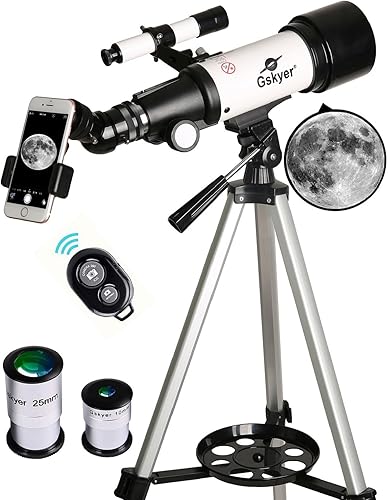
The best beginner telescope for astrophotography is the Gskyer Telescope for simple smartphone images of the Moon and bright planets. Its 70mm aperture, 400mm focal length, phone adapter and wireless remote keep the first steps manageable.
That combination suits a first-time user who wants to learn how a telescope is pointed, focused and held steady. It also suits a family that wants a compact refractor for short backyard sessions.
A beginner telescope is best treated as a way to learn framing, focus, steadiness and sky targets. Those skills matter more at the start than a high magnification number.
You learn to find a bright target with the finder scope, move the mount in small steps, and focus until the edge looks clean. A phone screen also reveals movement that is easy to miss with the eye alone.
Phone adapters help you record short views, but an altazimuth mount does not provide the long, precise tracking needed for serious deep-sky exposures. Understand that limit before you judge any phone-ready scope.
Short exposures of the Moon, Venus, Jupiter or a bright daytime landscape are a sensible place to begin. Those subjects are bright enough for clear shape and contrast without demanding precise tracking.
The Gskyer is travel friendly because the telescope and its adjustable aluminum tripod fit in a carry bag. A compact kit is easier to use often, and frequent short sessions often teach more than one long session with a cumbersome setup.
For that goal, compare our telescopes for galaxy astrophotography.
For a wider comparison, see our guide to the best telescope for astrophotography. If you already know you want more light, compare the best 8 inch telescope for astrophotography options.
Our score weighs the listed optics, mount, phone features, included accessories and fit for a first-time setup. We look at what is in the box, because a missing adapter or finder can slow a first session.
We also consider size and handling in daily use. A scope that is heavy to carry or awkward to store may be used less often, even if its numbers look strong.
Care matters from the first night. Let the telescope reach the outdoor temperature before you expect best focus, keep it out of damp conditions, and never aim it at the Sun.
Start low in magnification, steady the tripod on firm ground, and take several short phone images. That patient approach gives usable frames and a clear sense of when a larger aperture or tracking mount would help.
Our picks at a glance
-
1
-
2

-
3

- 4
 Best for a moon filterCheck it
- 5
 Check it
Celestron AstroMaster 130EQ Telescope for Deep-Sky Beginners
Best for learning deep-sky basics - 6
 Check it
ToyerBee Telescope for Adults & Kids
Best for family stargazing - 7
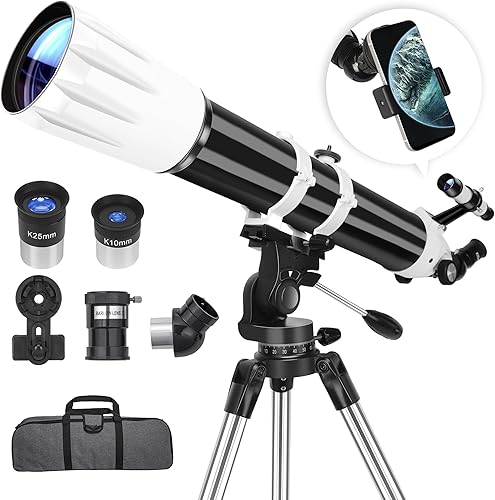 Check it
Hawkko 90mm Aperture 900mm Telescope for Adults
Best for high magnification - 8
 Check it
EACONN Telescopes for Adults Astronomy
Best for portable learning - 9
 Check it
Celestron Inspire 100AZ Beginner Refractor Telescope
Best for easiest setup
Which beginner telescope is best for astrophotography?
The Gskyer is the easiest overall starting point for phone-based astrophotography, while the AstroMaster 130EQ is the better learning choice for deeper-sky equipment and manual tracking. The right pick depends on whether you value portability, aperture or mount control.
If portability is your priority, a 70mm or 80mm refractor with a phone adapter will usually be easier to carry to a dark site. That ease can lead to more practice, which is where beginner skills are built.
If aperture is your priority, the 130mm reflector offers a different path. It gathers more light for fainter deep-sky targets, but it also asks you to learn a more involved mount.
Mount control is the other dividing line in this group. Altazimuth models move in familiar up, down and side to side directions, which suits visual viewing and short phone captures.
The equatorial AstroMaster moves in right ascension and declination instead. That system takes longer to learn, yet it gives a foundation for following objects across the sky.
Neither choice is right for every reader. Match the telescope to how you plan to observe, where you will store it, and how much setup time you are willing to spend.
Gskyer Telescope: Best for simple phone imaging
- 70mm aperture
- 400mm focal length
- Phone adapter and wireless remote
- Adjustable aluminum tripod and carry bag
The Gskyer combines a compact 70mm refractor with a smartphone adapter and wireless camera remote. Its altazimuth mount suits beginners who want to start with lunar and planetary images.
Pros
- Phone adapter included
- Wireless remote included
- Compact travel design
Cons
- Altazimuth mount is limited for long exposures
- 70mm aperture is smaller than several picks here
The Gskyer is a strong first choice for a beginner who wants a compact refractor for lunar and planetary images. Its 70mm aperture and 400mm focal length create a manageable setup for learning how to center a target and focus manually.
The included smartphone adapter lets you place a phone behind the telescope, while the wireless camera remote can reduce movement when you capture an image. The 3x Barlow lens increases the magnification of each eyepiece, but higher magnification also makes hand movement easier to notice.
The altazimuth mount is simple for backyard viewing and the adjustable aluminum tripod supports different viewing positions. The carry bag helps keep the telescope and tripod together for travel.
Choose the Gskyer if you want a compact way to start with the Moon and bright planets. It is less suited to long-exposure deep-sky work because its mount is altazimuth rather than equatorial.
MEEZAA Telescope: Best for bright beginner views
- 90mm aperture
- 800mm focal length
- Fully multi-coated optics
- Phone adapter, tripod and carry bag
The MEEZAA offers a larger 90mm aperture and an 800mm focal length for bright lunar and planetary views. Its included phone adapter makes it a practical starting point for short smartphone captures.
Pros
- Large 90mm aperture
- Fully multi-coated optics
- Adjustable stainless steel tripod
Cons
- Longer optical tube needs more storage space
- Altazimuth mount is not intended for long tracking exposures
The MEEZAA is a good fit when you want more aperture than a small travel refractor. Its 90mm aperture and 800mm focal length can gather more light for bright lunar and planetary views, while fully multi-coated optics support brightness and clarity.
That step up suits beginners who have tried a smaller scope and want a brighter Moon view. It also suits adults who want one refractor for night sky targets and daytime landscapes.
The larger aperture does not remove the need for good technique. A longer focal length makes focus and movement more noticeable, so a steady tripod and small adjustments are essential.
The included 10mm and 25mm eyepieces cover different viewing levels, and the 3x Barlow lens increases their magnification. A phone adapter supports short smartphone captures, but manual focus and an altazimuth mount make this a learning setup, not a long-exposure rig.
Start with the lower magnification eyepiece to find and center the target. Move to higher magnification only after the view is steady, because extra power makes wobble more obvious.
Its stainless steel tripod adjusts from 28 to 46 inches for standing or seated users. The carry bag and accessories make it easier to move between home and an outdoor site.
Pick the MEEZAA when a larger refractor matters more than the smallest packed size. Compare the tube length with your storage space before ordering.
Koolpte Telescope for Adults: Best for no-tool setup
- 80mm aperture
- 600mm focal length
- Phone adapter and wireless remote
- Adjustable aluminum tripod
The Koolpte is aimed at beginners who want an 80mm refractor with phone capture accessories and no-tool setup. Its 600mm focal length gives a useful middle ground for the Moon and bright planets.
Pros
- No-tool setup
- Phone adapter and wireless remote
- 80mm aperture
Cons
- Altazimuth mount limits exposure time
- Manual focus requires careful adjustment
The Koolpte suits beginners who want an 80mm refractor with a simple setup. Its 600mm focal length sits between shorter travel scopes and longer 800mm and 900mm models, giving a flexible starting point for the Moon and bright planets.
That middle length balances lunar detail with a frame that is easier to manage. It suits beginners unsure whether they prefer wider views or a narrower, more detailed view.
The telescope includes 25mm and 10mm eyepieces, a 3x Barlow lens, a 5x24 finder scope, phone adapter and wireless remote. The phone accessories support basic image attempts, while the no-tool setup keeps the first session focused on alignment and focus.
A finder scope matters more than many beginners expect. It gives a wider view for locating a target first, and that step can save a lot of time at the eyepiece.
Its adjustable aluminum tripod and carry bag support portable use. Set the tripod on level ground and tighten it before attaching the phone, since added weight at the back can change balance.
Manual focus means small changes while viewing the phone screen, since a phone makes slight blur easier to see. Take a short burst at each focus step rather than relying on a single frame.
Choose the Koolpte if ease of setup and a middle-size tube are your priorities. Its altazimuth mount is better for short captures than extended tracking.
HUGERSTAR Telescope: Best for a moon filter
- 90mm aperture
- 800mm focal length
- Included moon filter
- Phone adapter and stainless steel tripod
The HUGERSTAR pairs a 90mm refractor with a moon filter and smartphone adapter. It suits beginners whose first imaging targets are the Moon and bright daytime or nighttime subjects.
Pros
- Moon filter included
- Phone adapter included
- Adjustable stainless steel tripod
Cons
- Altazimuth mount is not for long exposures
- 800mm tube is less compact than short travel scopes
The HUGERSTAR is the best fit here for a beginner who wants a moon filter included with a phone-ready refractor. Its 90mm aperture and 800mm focal length are matched with fully multi-coated lenses for bright views of the Moon and stars.
That pairing suits a beginner whose first target is the Moon. The Moon is bright, large and easy to find, so it gives you a forgiving subject for learning focus and phone alignment.
The moon filter can reduce glare during lunar viewing, which may make it easier to frame details through a phone. It can also make visual viewing more comfortable when the Moon is fully lit.
The telescope also includes 10mm and 25mm eyepieces, a 3x Barlow lens, 5x24 finder scope and smartphone adapter. Use the finder scope to center the Moon first, then switch to the eyepiece and adjust focus in small steps.
Its stainless steel tripod adjusts from 28.7 to 46.4 inches, and the carry bag supports storage and travel. The height range helps both seated and standing observers, which matters during a longer session.
The 80cm optical tube is longer than the Gskyer or ToyerBee, so plan for more room when packing it. Measure a cupboard or car boot before you travel, rather than assuming a long tube will fit.
Pick this model when Moon photography is your first target and a filter is useful to your setup. The altazimuth mount remains the main limit for long exposures.
Celestron AstroMaster 130EQ Telescope for Deep-Sky Beginners: Best for learning deep-sky basics
- 130mm Newtonian reflector
- 650mm focal length
- German equatorial mount
- Slow-motion control knobs
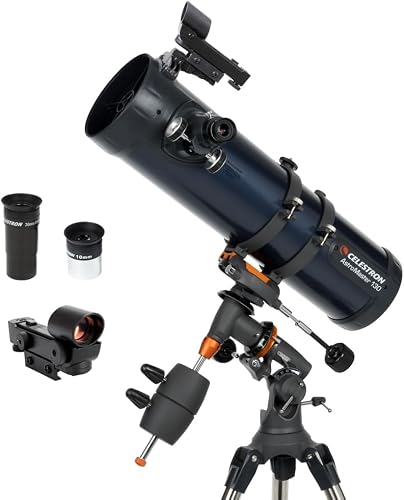
The AstroMaster 130EQ has the largest aperture in this group and an equatorial mount with manual slow-motion controls. It is the strongest fit for beginners who want to learn more about deep-sky viewing before adding more imaging gear.
Pros
- 130mm optics
- Equatorial mount
- Slow-motion controls
Cons
- Heavier at 17 lb
- More involved mount learning than an altazimuth model
The Celestron AstroMaster 130EQ is the strongest choice for a beginner who wants to learn the foundations of deep-sky observing and equatorial control. Its 130mm Newtonian reflector has the largest aperture in this roundup, and its German equatorial mount uses slow-motion controls for right ascension and declination.
The 20mm eyepiece, 10mm eyepiece and StarPointer red dot finderscope give you a clear starting set for locating and viewing targets. The mount is more involved than an altazimuth design, but it teaches a different way to follow objects across the sky.
At 17 lb fully assembled, it is less convenient for quick travel than the smaller refractors. Its 650mm focal length gives it a useful balance between wide views and higher-power viewing.
Choose the AstroMaster if you want the most aperture here and are willing to spend more time learning the mount. For a deeper comparison, read about the best telescope for deep sky astrophotography.
ToyerBee Telescope for Adults & Kids: Best for family stargazing
- 70mm aperture
- 300mm focal length
- Phone adapter and wireless remote
- Star chart and tripod
The ToyerBee is a lightweight 70mm refractor with a phone adapter, wireless remote and star chart. Its short 300mm focal length suits wide, simple views and family learning sessions.
Pros
- Light 3.5 lb design
- Phone adapter and remote
- Star chart included
Cons
- Smaller aperture than the 90mm and 130mm picks
- Short focal length favors wider views over fine detail
The ToyerBee is a practical family choice for simple Moon and planet sessions. Its 70mm aperture and 300mm focal length create a short, lightweight setup that is easier to carry to a campsite or backyard.
That short focal length suits wide, friendly views and daytime use. It is a good match for children who want to learn where objects are before photographing fine detail.
The telescope includes a 20mm eyepiece, 6mm eyepiece, 3x Barlow lens, 5x24 finderscope, phone adapter, wireless remote and star chart. That combination supports basic viewing and beginner phone experiments, while the star chart gives new users a starting point for learning the sky.
A star chart also helps turn a viewing session into a lesson. You can point out a bright star, find it in the chart, and look for it again on the next clear night.
At 3.5 lb, it is the lightest model in this group with a stated weight. That lightness makes it easier to move between a garden, a campsite and a dark-sky location.
The shorter focal length favors wider views, so it is less focused on fine lunar detail than the 800mm and 900mm telescopes. That is a trade-off, not a flaw, because a wider view can be easier for a new user to frame.
Choose the ToyerBee for family learning, portability and easy first sessions. It is not the best fit if your main goal is a larger aperture for faint objects.
Hawkko 90mm Aperture 900mm Telescope for Adults: Best for high magnification
- 90mm aperture
- 900mm focal length
- 36x–270x magnification
- Phone adapter and carry bag
The Hawkko uses a 90mm aperture and 900mm focal length for a narrow, high-magnification approach to lunar and planetary viewing. Its phone adapter supports beginner experiments with short captures.
Pros
- 90mm aperture
- Long 900mm focal length
- Complete accessory kit
Cons
- Long tube is less compact
- Altazimuth mount limits long-exposure imaging
The Hawkko suits beginners who want a long focal length for higher-magnification lunar and planetary viewing. Its 90mm aperture and 900mm focal length support the stated 36x to 270x range, with a phone adapter for basic image capture.
That long focal length gives a narrower view than the shorter travel scopes. It suits a user who wants the Moon to fill more of the frame and who is ready to make focus changes in very small steps.
Higher magnification also brings a practical warning. Small movements from the mount, tripod or your own touch become easier to see, so steadiness matters more than it does at low power.
The kit includes 10mm and 25mm eyepieces, a 3x Barlow lens, finderscope, zenith mirror, accessory tray, carry bag and stainless steel AZ tripod. The tripod adjusts from 28 to 46 inches and supports 360-degree rotation.
The accessory tray is a small but useful detail. It gives eyepieces a place to sit while you work, which reduces the chance of dropping a part on the ground in the dark.
The 90cm optical tube needs more storage space than the short travel models. Its altazimuth mount keeps operation approachable, but it does not solve the tracking demands of long-exposure deep-sky photography.
Pick the Hawkko if lunar detail and a long optical tube matter more than compact travel. For DSLR-specific planning, see the best telescope for DSLR astrophotography guide.
EACONN Telescopes for Adults Astronomy: Best for portable learning
- 80mm aperture
- 600mm focal length
- Backpack and adjustable tripod
- Customized phone adapter
The EACONN gives beginners an 80mm refractor with a backpack, adjustable tripod and customized phone adapter. It fits readers who plan to move between home, camping sites and darker observing locations.
Pros
- Portable backpack
- Customized phone adapter
- 80mm aperture
Cons
- Altazimuth mount is not for long tracking exposures
- Included eyepieces favor basic viewing ranges
The EACONN fits beginners who want to carry a telescope between home and darker observing locations. Its 80mm aperture and 600mm focal length are paired with a backpack, adjustable tripod and customized smartphone adapter.
That portable layout suits a user who plans to observe in more than one place. A backpack makes it easier to carry the tube and accessories together, rather than making several trips from a car.
The K20mm and K9mm eyepieces cover 30x to 66x magnification. A 5x24 finder scope helps locate targets, while the phone adapter is designed around the included eyepieces for basic smartphone images.
The customized adapter is a thoughtful detail for a beginner. It is shaped to work with the included eyepieces, which can make phone alignment less confusing than a generic holder.
Its rough adjustment and positioning gimbal uses altitude and azimuth scales. That makes it easier to understand where the telescope is pointing, though the altazimuth design remains better for short exposures than extended tracking.
Scales also help you repeat a setup. If you note the position for a regular target, you can return to a similar pointing on another night.
Choose the EACONN when portability is central to your observing routine. It is a sensible middle option for learning phone alignment without moving up to the heavier AstroMaster.
Celestron Inspire 100AZ Beginner Refractor Telescope: Best for easiest setup
- 100mm refractor
- Built-in smartphone adapter
- Focus micrometer
- Integrated red LED flashlight
The Inspire 100AZ focuses on a quick start, with a built-in smartphone adapter, focus micrometer and folding accessory tray. It suits families and beginners who value setup simplicity over long-exposure tracking.
Pros
- Built-in smartphone adapter
- Focus micrometer
- 100mm aperture
Cons
- Altazimuth mount limits tracking
- Heavier than the smallest travel models
The Celestron Inspire 100AZ is the best choice here for a quick, family-friendly setup. Its 100mm refractor includes a built-in smartphone adapter, folding accessory tray and focus micrometer.
That quick-start design suits a household that wants to begin viewing without a long assembly process. A setup that is fast to open and close is more likely to be used on a clear night.
The focus micrometer helps you return to a specific focus point after you find a setting for a target. That can save time when you return to the same planet or daytime subject on another day.
Its integrated red LED flashlight can illuminate the accessory tray without using a bright white light during a night session. Red light is a considerate detail because it helps you find eyepieces while disturbing your night vision less.
The telescope includes 20mm and 10mm Kellner eyepieces, a 90-degree erect image diagonal and a StarPointer Pro red dot finderscope. The erect image diagonal also helps with daytime viewing, where a correct image makes landscapes easier to follow.
The folding accessory tray keeps parts close to hand. That small design choice matters when you are working outside in the dark and do not want to bend down for each eyepiece.
Choose the Inspire 100AZ if setup time and phone access matter most. If you prefer a portable optical tube, compare it with the best portable telescope for astrophotography picks.
What should beginners look for in an astrophotography telescope?
Beginners should first choose the targets they want to photograph, then match the aperture, focal length, mount and phone connection to those targets. A telescope that is easy to point and steady on its tripod is more useful for learning than one with a high magnification number alone.
Is aperture important for beginner astrophotography?
Yes. A larger aperture can collect more light, which helps when you view bright planets and fainter objects.
The 130mm AstroMaster has the largest aperture here, while the ToyerBee and Gskyer use 70mm optics that keep the systems lighter.
Aperture also affects size and handling. If you expect to travel often, an 80mm or 70mm refractor may be easier to carry and set up consistently.
Does focal length affect beginner images?
Focal length changes the view and the way large targets fit in the frame. The ToyerBee's 300mm focal length favors wider views, while the Hawkko's 900mm focal length gives a narrower view that can suit lunar detail.
Longer focal lengths also make movement and focusing more noticeable. Start with a bright target, use a stable tripod, and make small manual focus changes while checking the phone screen.
Is a phone adapter enough for astrophotography?
A phone adapter is enough to begin with short images of the Moon, bright planets and other easy targets. The Gskyer, MEEZAA, Koolpte, HUGERSTAR, ToyerBee, Hawkko and EACONN all include phone-related accessories, while the Inspire 100AZ has a built-in smartphone adapter.
That makes phone imaging a realistic first step for many beginners. You can learn focus, framing and steadiness without buying a separate camera or mount at the start.
A phone adapter does not turn an altazimuth telescope into a long-exposure tracking system. For deeper targets, mount movement, alignment and exposure control become more important.
Think of the adapter as a way to record what the telescope shows in a short moment. The mount still needs to follow the sky if you want exposures that last longer than a quick snapshot.
Beginners should also consider how the phone connects in daily use. A secure holder, a steady tripod and gentle focus adjustments will improve results more than chasing a higher magnification setting.
A wireless remote, where included, can reduce shake when you start an image. That small accessory is useful because even a light touch on the phone can move the view.
Start with bright targets and keep exposures short. You will get clearer images and a better sense of what a future tracking mount would add.
What mount is easiest for a beginner?
An altazimuth mount is usually the easiest starting point because it moves in familiar up, down and side-to-side directions. Most picks here use altazimuth mounts, including the Gskyer, MEEZAA, Koolpte, HUGERSTAR, Hawkko, EACONN and Inspire 100AZ.
The AstroMaster 130EQ uses a German equatorial mount with slow-motion controls. It takes more learning, but it gives a beginner a useful introduction to manual tracking.
How should you start taking telescope photos?
Start with the Moon, use the lowest useful magnification, and make the telescope steady before attaching the phone. Focus through the phone screen, use a remote when included, and take several short images rather than expecting one perfect frame.
The Moon is a forgiving first target because it is bright and large. You can practice finding it, centering it, and focusing until its edge looks sharp.
Low magnification gives a wider view and makes movement less obvious. That wider view is easier to frame on a phone screen, especially during first attempts.
Set the tripod on firm, level ground and tighten the adjustment points before viewing. A tripod on soft grass or a loose surface will move more than you expect.
Allow the telescope to reach the outdoor temperature, keep optics dry, and never aim any telescope at the Sun. Temperature changes can affect focus, and moisture on the lens can spoil a session.
Work in a calm, dark place away from bright lights when you can. Nearby light makes it harder to see faint stars and can also affect phone exposure.
Attach the phone gently and check that it does not pull the telescope out of position. If the view shifts when the phone is added, adjust the tripod or mount balance before continuing.
Take several short images at slightly different focus settings. That small set gives a better chance of one frame with a clean edge and steady detail.
Keep notes about the target, eyepiece and focus position. Notes help you repeat a good setup and notice what changed on the next night.
For more lunar and planetary planning, begin with our How to Use a Telescope for Beginners: A Beginner’s Guide. If you are considering a larger optical tube, our guide answers Is an 8 Inch Telescope Good for Beginners?.
Which beginner telescope should you choose?
Choose the Gskyer for the simplest compact phone-imaging start, the Celestron AstroMaster 130EQ for more aperture and equatorial learning, or the Celestron Inspire 100AZ for built-in phone access and easy setup.
Those three picks cover the main paths in this guide. The Gskyer favors portability, the AstroMaster favors aperture and mount learning, and the Inspire favors a fast first session.
Choose the MEEZAA or HUGERSTAR when a 90mm refractor fits your storage space. Both give a larger aperture than the 70mm models, with a longer tube to store and carry.
Pick the ToyerBee or EACONN when portability matters most. The ToyerBee is the lighter family option, while the EACONN adds a backpack for travel between sites.
Choose the Koolpte when a middle-length 80mm refractor and no-tool setup suit your routine. Its 600mm focal length is a flexible choice for the Moon and bright planets.
Choose the Hawkko when a 900mm focal length suits your lunar viewing goals. That long tube gives a narrower view, so it rewards a steady tripod and patient focusing.
Match your final choice to your storage, your observing location and your first target. A telescope you can set up often will teach you more than a larger one that stays in its bag.
Our top 3 picks at a glance
-
1
-
2
-
3
Frequently asked questions
What is the best beginner telescope for astrophotography?
The Gskyer Telescope is the best beginner telescope for astrophotography here because it combines a 70mm aperture, 400mm focal length, phone adapter and wireless remote in a compact package.
For deeper-sky learning, the Celestron AstroMaster 130EQ offers 130mm optics and an equatorial mount.
Can a beginner telescope take pictures?
Yes. Several beginner telescopes here include a smartphone adapter, and some also include a wireless remote.
These setups are best for short phone images of the Moon, bright planets and daytime subjects.
Long-exposure deep-sky imaging needs more than a phone adapter because the mount must track the sky accurately.
Is a refractor or reflector better for beginner astrophotography?
A refractor is often easier for a first phone-based setup because the optical tube is simple to use and several picks include phone adapters. A reflector can offer more aperture for the same general class of beginner telescope.
The AstroMaster 130EQ is the reflector here, while the other picks use refractor designs.
Do beginners need an equatorial mount?
Beginners don't need an equatorial mount for short lunar and planetary phone images. An altazimuth mount is often simpler to point and set up.
An equatorial mount can be useful when you want to learn manual tracking for deeper-sky work, which is why the AstroMaster 130EQ stands apart from the altazimuth picks.